




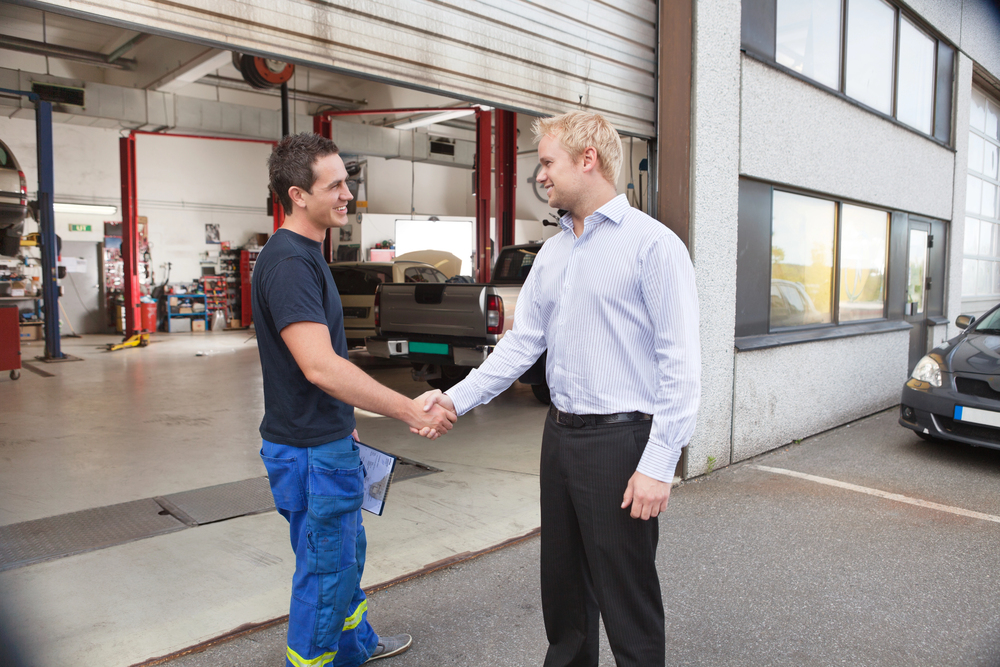
Shops that feel too busy to change how they operate are exactly the ones that need intentional systems to calm staff frustration and customer anxiety, said a shop owner and business coach
Many owners assume their volume makes it impossible to add new customer experience steps without overwhelming the front counter, explained Alysa Beech, a customer experience strategist with Beech Consulting and co-owner of Upper James Autopro in Hamilton, Ontario.
“If somebody had shown that to me before we had rewritten the job description of the service advisor, I would have felt exactly the same way,” she said at the Tirecraft 2026 Conference.
She played examples of detailed video updates her team sends to clients. Those videos, recorded by staff, walk customers through repairs, show worn and new parts and explain progress on the job.
Beech said there was “no possible human way” to fit that level of communication into her shop’s old workflow. The difference now, she said, was redesigning roles and processes so there was capacity to deliver consistent updates, both by text and by video, instead of reacting to problems at the end of the day.
Beech challenged the idea that long-standing industry habits are a reason to avoid change.
“Expertise is the enemy of innovation,” she said.
She told shop owners that if they insist that no one has any idea how busy their shop is, then they are avoiding innovation. Beech argued that change is possible if owners are willing to look at their business through a different lens.
Beyond scheduling and roles, Beech said systems can also humanize the experience and build loyalty without adding significant cost or time.
She described a spa visit where every staff member greeted her by name and mentioned her upcoming wedding, even though only one had spoken to her on the phone. She said that level of recognition came from “Secret Service” processes that record details, distinguish new and VIP customers and anticipate needs.
In one participating shop, Beech said technicians and apprentices spent about 40 minutes building a list of small, practical gestures they could use to surprise customers. The shop then linked those ideas to spending thresholds so that a certain invoice value triggered at least one “wow” action.
The Secret Service system relied on “hidden systems,” such as a place in the database to store personal details, and visual cues such as different key tags for first‑time or long‑time clients. Staff also looked for clues in vehicles, such as a favourite coffee order or children’s characters on stickers, and used those to personalize pick‑ups.
Beech stressed that these gestures should be “low or no cost,” easy to execute and have “zero impact on productivity,” while creating an immediate emotional impact.
Customer experience, she said, only becomes reliable when those kinds of touches are built into the way the shop runs every day.
“Customer experience works when it’s process driven,” Beech said. “These are not things that are hard. They are not things that are impossible. They just take some intentionality.”
Image credit: Depositphotos.com
Related Posts


Comments
-
This can be easily explained. Under promise and over deliver. Works every time.
-
I think you should send your customers videos of your new homes, new cars, and wonderful vacations you take, to let them know how successful you are. You cant get anymore personal than that. I can take a picture of worn out brakes with my cell phone and text it to my customer. “Needs brakes $600.00″ Wait for reply. Done! or take a picture of a rear main seal leak on a 2003 Nissan Frontier, 4×4 with torsion bar suspension, and text ” Hi sorry to relay bad news, but your rear main seal is leaking. The last one I did was in 2020 for around $2000.00 and unfortunately I am not interested in doing another one. Your going to have to either take it to a transmission shop to have it done, keep topping up your oil, or replace your vehicle. Sorry, no charge for checking it for you.” Done.
-
Know why some of us are too busy to think about frills like this? Because we’re already treating every customer this way. The stealerships need to reconsider their horrible abuse of their customers (and their technicians for that matter), and it’s why I’ve seen literal teers of joy after second opinion inspections following a dealership estimate.


Leave a Reply