




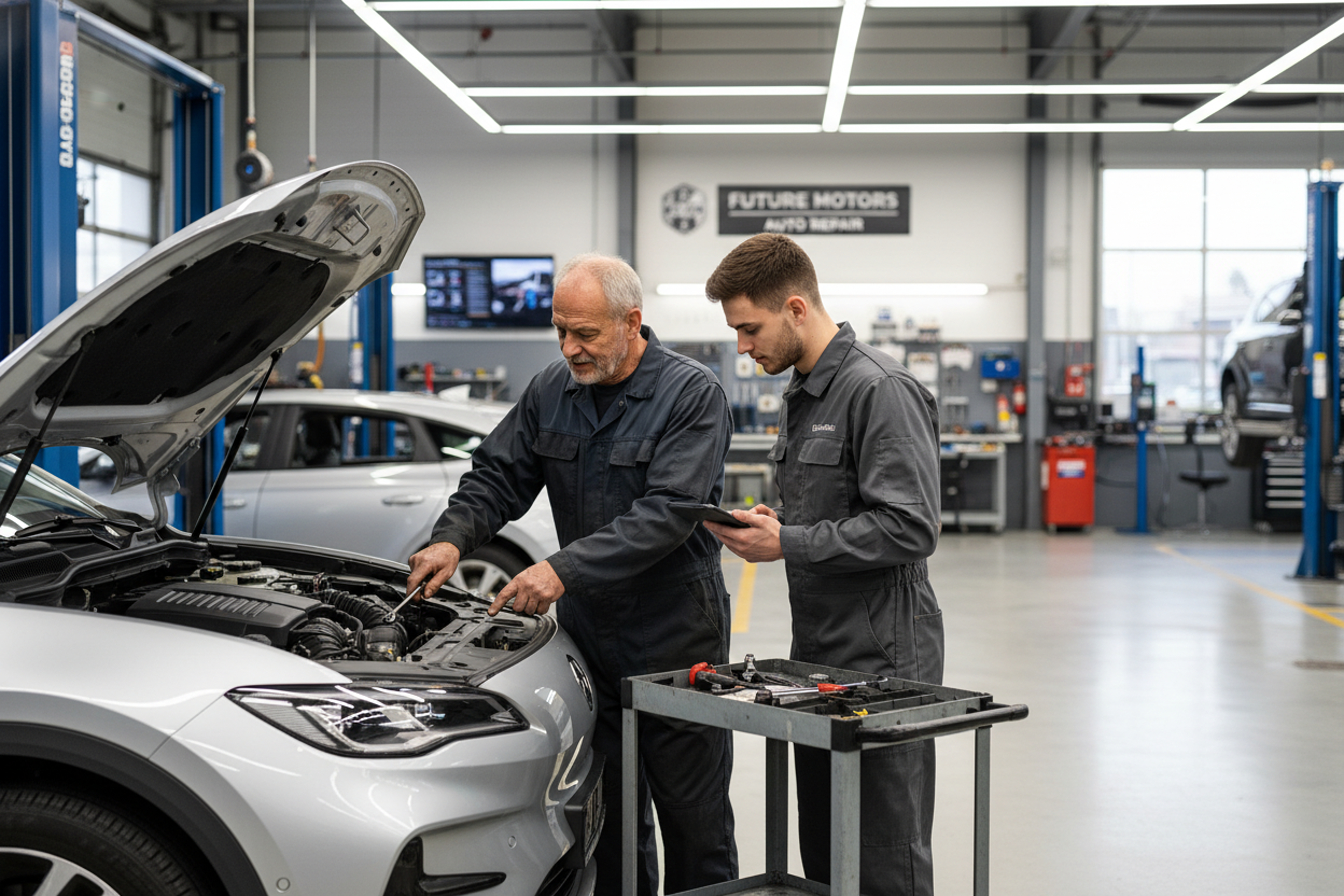
Rapid changes in vehicle technology, customer expectations and workforce demographics are forcing repair shops to rethink how they train and develop their staff, according to a shop owner and industry instructor.
Matthew Wagg, owner of Accelerated Diagnostic and Automotive and a coach with Auto Ignite Management, told attendees of the Midwest Auto Care Alliance Hi‑Tech Training and Vision Expo that a culture of continuous learning is becoming essential for long‑term survival in the auto repair industry.
“The landscape is changing, and it’s changing not only in the automotive industry,” Wagg said. “It’s changing everywhere.”
Speaking at the event in Kansas City, Wagg said advances in vehicle technology alone require a new approach to training. Modern vehicles, he said, are increasingly complex, with more electronic systems and consumer technology integrated into their design.
“Cars are getting harder and harder to work on,” he said. “They’re putting more and more consumer tech on these cars.”
Wagg warned that many technicians already struggle with complex issues on vehicles that are 10 to 15 years old. Without ongoing development, he said, shops will be unable to service the vehicles coming into their bays in the next decade.
“Imagine where we’re going to be in 10 years,” he said.
This was an issue flagged by Murray Voth at the AIA Canada National Conference. Shops are left servicing much older vehicles, a trend he said is eroding profitability and increasing operational strain.
Beyond technical skills, Wagg said learning must extend to management, communication and emotional intelligence. He emphasized that leaders must model the behaviour they expect from their teams.
“If I’m going to tell you to do something,” he said, “I better do it.”
Wagg described emotional intelligence as foundational to leadership and team performance. Once referred to as “soft skills,” he said, those abilities are now critical.
“They used to call it soft skills,” Wagg said. “I call it power skills.”
Building a learning culture improves engagement, boosts morale and helps retain employees in a highly competitive labour market. Shops that fail to invest in people, he said, risk falling behind as experienced technicians retire and fewer seasoned workers enter the trade.
“We’ve got to keep learning,” Wagg said. “We’re never done learning.”
A learning culture also helps attract new employees, particularly younger workers who expect development opportunities and modern tools.
“People want to work in environments that have those things,” he said, urging shop owners to see learning as a long‑term investment rather than a cost, even if employees eventually move on.
“Help them grow,” Wagg said. “That is our obligation.”
Image credit: Depositphotos.com


Leave a Reply