



A shop’s most advanced diagnostic tools and highly trained technicians will not matter if front counter staff are not trained to keep customers coming back, according to a shop coach and owner.
Owners routinely invest in technical training, but often resist spending on front counter skills, said Alysa Beech, a customer experience strategist with Beech Consulting and co-owner of Upper James Autopro in Hamilton, Ontario, at the recent Tirecraft 2026 Conference.
“Shop owners will pay for technical training. That’s never hard,” she said. “I can sign up any shop owner for technical training, but front counter training? Why is that like asking for a firstborn child?”
Beech said the front counter is where customer loyalty is won or lost. If a shop cannot “lock those cars into our bays,” the investment in technical training will not pay off.
“We can have the sharpest, the most up to date technicians we want in the back if we’re not locking those cars into our bays. And who does that? That’s your front counter,” she said. “If we’re not locking those customers in, well, then great — you spent a lot of money on training but you’re not going to get to use it.”
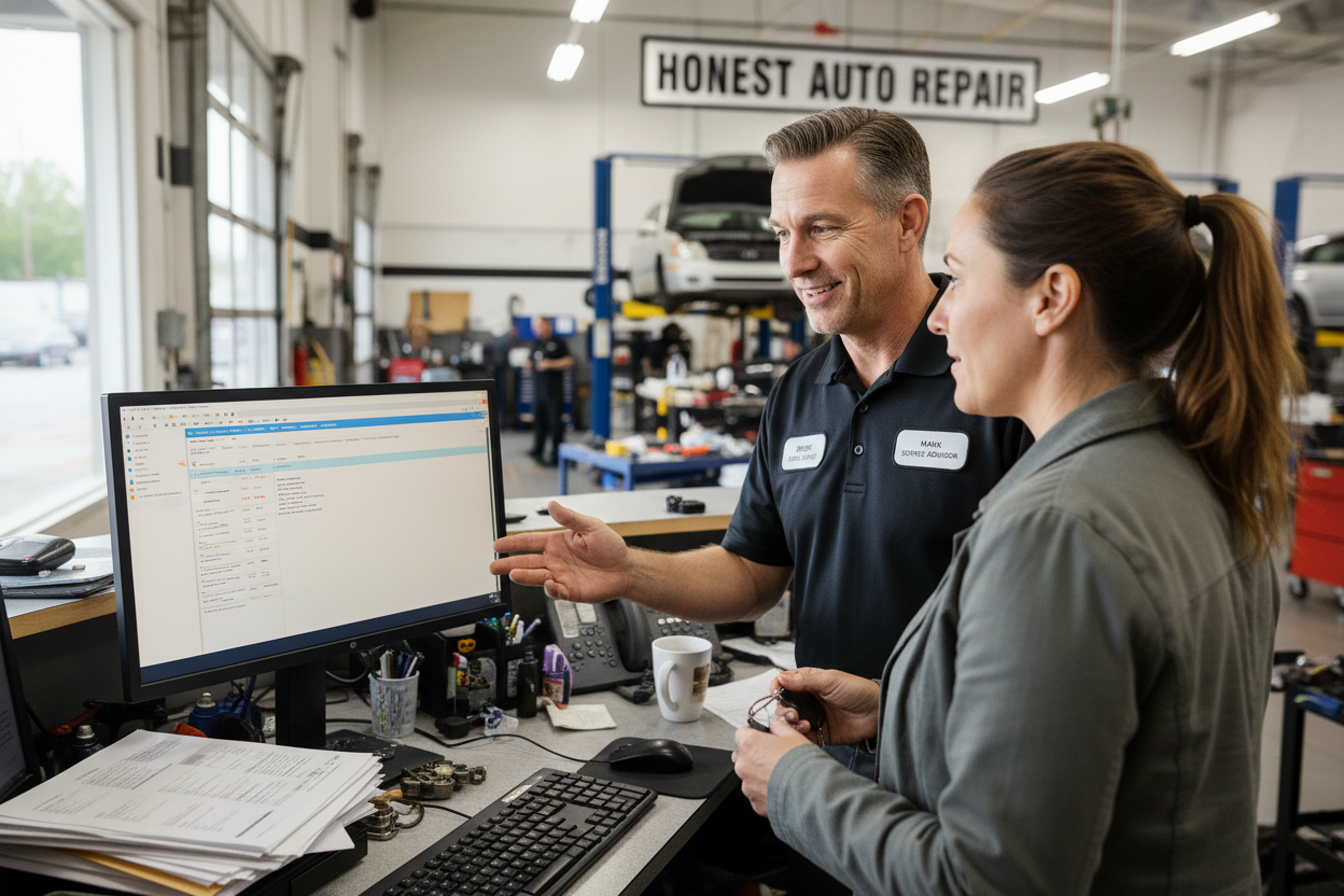
Beech described the service advisor role as complex and demanding, requiring a rare mix of people skills, sales ability and technical understanding.
“They have to keep a lot of balls in the air,” she said. “They have to be extremely personal. They have to be sales-focused and sales-driven. They have to have strong technical knowledge. They have to be up to date on technology, very detail-oriented. This is a hard job.”
In her own business, Beech said that complexity led to mistakes, missed updates and customer frustration.
“People were falling through the cracks. Parts were ordered wrong,” she said. “We forget to update a client at four o’clock and he’s asking us and his car is done. It hasn’t come into the shop. We all know what that feels like.”
To address this, her shop redefined its front counter structure and split the traditional advisor role into two positions: Customer experience advisor and vehicle consultant.
The customer experience advisor became “the ambassador and experiential guide” to the business and took on “probably 80 per cent of customer interactions,” including phone calls, walk-ins, check-ins, check-outs and customer updates.
The vehicle consultant was responsible for shop flow, quoting and sales.
“In doing this, we pushed his desk to the back. He didn’t have to handle the general population coming through,” Beech explained. “He could just kind of laser in on quoting and selling.”
The result, she said, was “a major decrease in” wrong parts orders and “a major uptick in sales.” Customers also felt their hands were being held through the process, particularly because the redefined roles supported a structured system of client updates.
Beech acknowledged the change came with “growing pains” and said cross-training remained important so everyone at the front knew how to do every job. However, she argued that separating the roles recognized that they require different strengths.
“It’s, they’re two different skill sets, so why should they be one?” she said.
Beech linked front counter training and structure to the wider problem of competing on price. She warned that in slow periods, owners can slip into a “race to the bottom” mentality, focusing on being cheaper instead of better.
“There’s always someone cheaper,” she said. “There’s always somebody with less overhead, willing to lose money to do the same job is you. There’s always somebody out there. That’s not a race that we’re interested in playing.”
Related Posts




Comments
-
Great idea! Add another position to the already overstaffed company. Add another wage which will increase the consumers vehicle repair cost per annum, because they are the ones going to be paying for this new position. Increasing the consumers repair cost per annum forces them into a newer more technical vehicle sooner which increases their lifetime car count. Today’s consultants are ruining this industry. Why am I so adamant on this topic? Because I believe consultants are doing more harm than good, I believe their business model is pushing consumers back to the dealerships. I believe they are helping scare technicians out of this industry and making it unaffordable for a technician to venture out to own & operate an aftermarket garage today. Im 59 years old and have been listening to this crap for more than 35 years and refuse to follow these business strategies. I have successfuly succeeded in this industry, and I want to pass on my legacy to the next generation, but these consultants business models are making it very difficult to achieve my final goal of selling my business to the next determined hard working technician. As a consumer if I had to chose to take my car to a business model that your promoting or take it back to the dealership, I would take it back to the dealer. Just think about that for a moment.

Leave a Reply