
Where the rubber meets the snow
Share

View the latest digital editions of all of our publications or head straight to the archives

Share
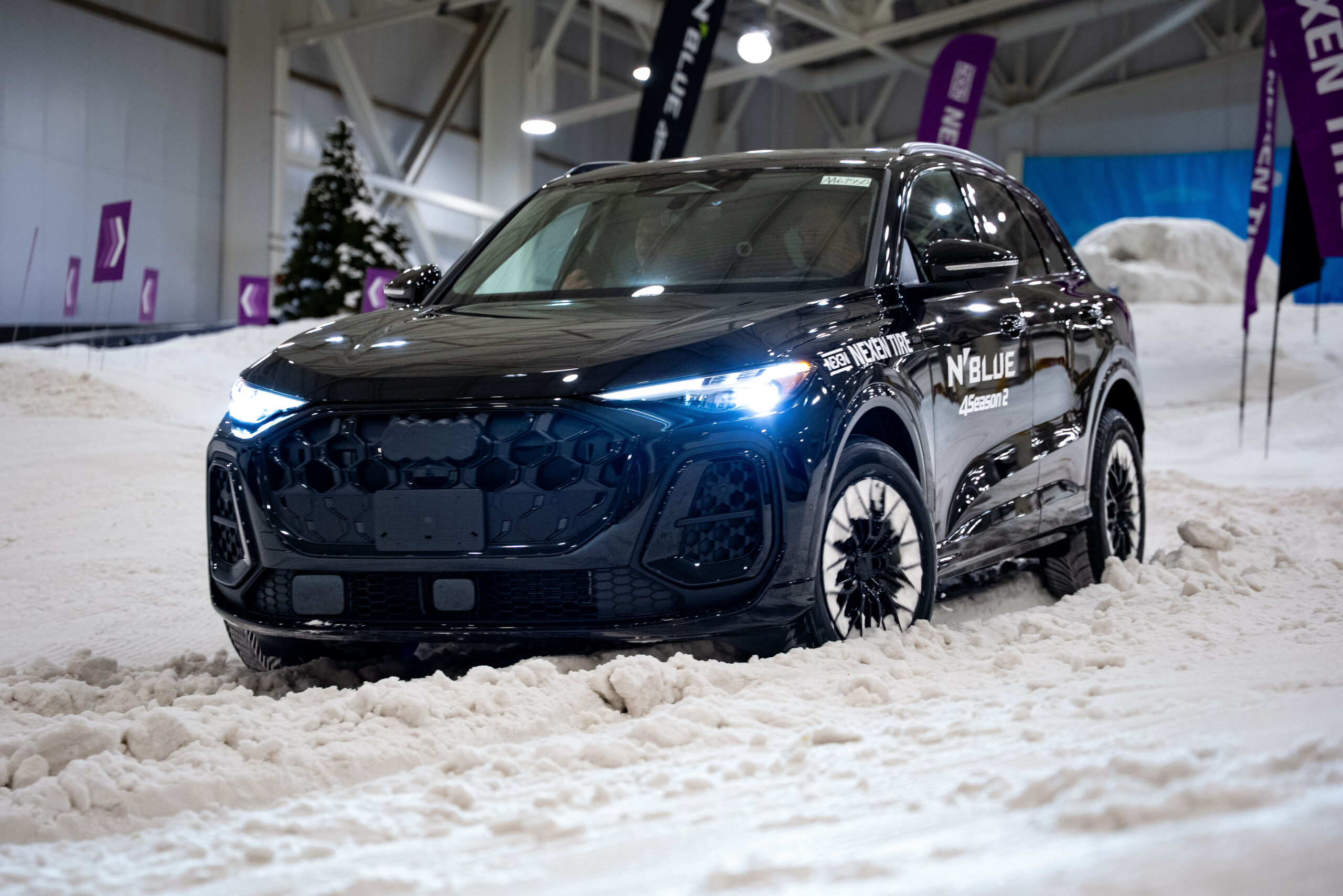
Recently, I had the opportunity to test out a new set of all-weather tires at an indoor snow park in New Jersey. It’s not every day you get the chance to drive up and down a ski hill with about half a foot of snow cover and then see how the tires perform in ideal conditions on dry roads, so I was excited to try them out.
Tire technology has come a long way, with many tires now specifically designed and manufactured with the materials necessary for optimal performance based on weather, temperature and driving style. City and highway tires, performance tires, all-terrain tires, off-road tires, snow and ice tires, EV-ready tires, all-season tires and all-weather tires — there are a lot to choose from based on where you live and what your driving conditions are like.
Not long ago, all-season and all-weather tires were not considered the best choice for drivers, as they lacked top-tier performance in any given season.
Advances in compounds and tread design are expanding year-round capability, but choosing the right tire still starts with the severity of a customer’s winter driving conditions.
A customer asking for one set of tires to use year-round is asking a repair shop to assess several competing demands, such as cold-weather traction, wet braking, summer stability and tread life.
Today’s all-weather tires aim to meet those demands. Explaining how they do it — and where their capabilities may have limits — is becoming an important part of the service adviser’s job.
Test-driving Nexen’s N’Blue 4 Season 2 tires, along with attending a technical presentation, illustrated the engineering behind that compromise. The discussion centred on three elements: the tire compound, the tread pattern and the footprint where the rubber meets the road.
Each influences traction, and together they help explain why a tire’s suitability depends on more than its category name.

Reading the snowflake
Conventional all-season and all-weather tires can sound interchangeable to customers. A useful distinction is the three-peak mountain snowflake symbol, which identifies tires meeting specified snow-traction requirements.
All-weather products combine that qualification with a design intended for year-round use. Dedicated winter tires can carry the same symbol while pursuing a different level of performance.
The traction-truck procedure described in Nexen’s presentation revealed what the qualification measures. A specially equipped truck tests a tire on prepared snow, measuring the forces it produces as the test wheel spins faster than the vehicle’s travelling speed.
The reference tire is tested before and after the tire being evaluated to help account for changing conditions. Against the specified 16-inch reference tire, the presentation identifies a minimum qualifying traction index of 112, which is 12 per cent above the reference tire’s index.
This measurement does not mean a vehicle will stop 12 per cent sooner, nor does the symbol establish how the tire compares with every dedicated winter tire on ice or through a corner. It simply indicates the traction level the tire achieved during the test compared with the reference tire.
For a service adviser, the symbol supplies useful evidence of snow traction. The next questions concern where and how the customer drives.
The chemistry beneath the tread
Rubber becomes stiffer as temperatures fall, making the compound essential to winter performance.
The engineering challenge is to maintain useful flexibility in the cold while also delivering wet grip, acceptable wear and stability in warmer conditions. A compound is a blend of materials, including rubber polymers, reinforcing fillers and additives.

Nexen says its latest formulation increases resin content fivefold compared with the previous generation. Aaron Neumann, head of Nexen Tire America Technical Center, described improvements in making those resins compatible with the other materials in the compound.
“We’re not the only ones in the industry with this technology,” said Neumann, indicating that this type of technology is advancing.
The presentation used laboratory measurements to explain the intended benefits.
Nexen’s graphs use these measurements as indicators of cold flexibility, wet grip and rolling resistance and help explain the design approach.
It is also important to note that a point on a laboratory curve should not be seen as a blanket assurance that a tire will perform adequately at a particular outdoor temperature. Snow, ice, water, tread condition and vehicle operating conditions also matter.
Giving the tread edges support
Compound chemistry works alongside the tread pattern to help produce better handling, manoeuvrability and stopping power.
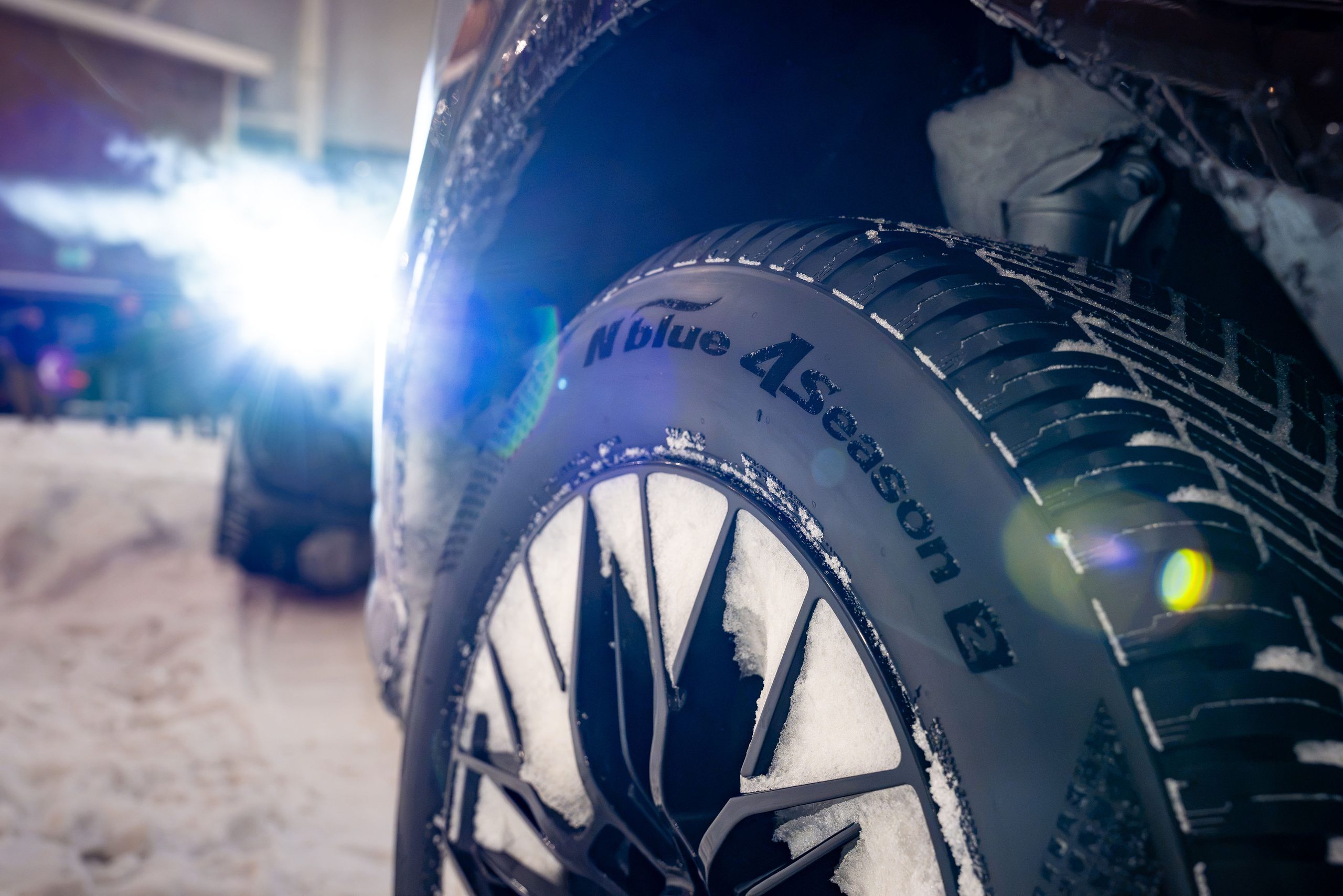
The N’Blue 4 Season 2 uses a directional, V-shaped design with 80 repeating tread elements, or pitches. Nexen says the arrangement increases the number of biting edges. Channels between the elements provide routes for water to leave the contact area.
The tread also incorporates interlocking sipes, the narrow cuts within the tread blocks. These features seek to balance the edges needed for traction with support for the blocks under load.
“Under heavy braking, it adds stiffness to that tread block and improves the stopping distance,” Neumann said of the shoulder’s three-dimensional interlocking sipes.
This illustrates an important design hurdle: adding edges must be balanced against controlling tread movement.
Keeping the footprint working
The contact patch is the third part of a tire’s design equation.
Nexen showed pressure-distribution images under two combinations of load and tire inflation pressure. The goal was to preserve a relatively square footprint and distribute work across the tread, supporting traction and even wear.
Neumann described using virtual design tools to adjust the tire’s shape and construction before evaluating the predicted footprint.
For technicians, the practical connection is correct application and maintenance.
Directional designs also require attention to the rotation arrow during mounting. Subsequent rotations must respect the direction of travel and any restrictions imposed by different front and rear tire sizes.
What the comparison establishes
Nexen’s comparative results illustrate why tire selection involves trade-offs.
The company reported a wet stopping distance of 51 metres for its tire, compared with 55.1 metres for a competitor’s tire and 57.8 metres for another.
In dry conditions, one competitor’s tire stopped in 39.8 metres, compared with 41.8 metres for the Nexen and 45 metres for another competitor.
Those are manufacturer-supplied figures. The presentation does not provide sufficient detail about starting speeds, tire specifications, repeated runs or variability to establish a comprehensive ranking.
They do show why a recommendation should consider several performance measures. Even the manufacturer’s own comparison does not establish one tire as the clear winner in every category.
Matching the tire to the weather
The most useful qualification came during a question about operating conditions.
Discussing drivers facing demanding winter conditions, including frequent trips to ski resorts or travel in mountain climates such as Canada’s Rocky Mountain region, Neumann acknowledged the advantage offered by dedicated winter products.
“You can get better snow traction than this,” he said, referring to Nexen’s all-weather option.
For shops, that is the opening for a more useful conversation than simply asking whether the customer wants to avoid seasonal tire changes.
Technicians should ask customers about unploughed roads, mountain travel, recurring ice, persistent cold and whether the vehicle must be driven regardless of the forecast. Those answers help establish how much emphasis to place on winter performance.
Transport Canada recommends winter tires on all wheels for driving in cold, snowy or icy conditions.
While an all-weather tire can suit a customer seeking year-round service across varied weather conditions, that choice still calls for a discussion of the specific tire’s capabilities and the conditions the driver will encounter.
It also requires continuing service. Without a seasonal changeover, shops should make sure tire inspections remain part of scheduled maintenance, including measuring tread depth, checking pressure and looking for uneven wear. Transport Canada advises that tires worn close to four millimetres should not be used on snow-covered roads.
The recommendation begins with the customer’s roads and weather. Compound chemistry, tread features and test results give the shop the evidence to explain it.
The verdict
Several factors need to be considered when selecting the “best” tire for your specific driving conditions. Colder climates where snow and ice are common on roads and highways require seasonal changes between winter and summer tires to get optimal performance.
But for those in more moderate climates, or where winter driving conditions are either non-existent or moderate, an all-weather or all-season tire is a good option with less maintenance from season to season. Nexen’s all-weather option handled well in the snow, allowing the vehicle to accelerate up the snow-covered hill while avoiding skidding out of control on the way down.
In the ideal road conditions outdoors, the tires were smooth, relatively quiet and sharp around corners.
So, although tire technology has come a long way over the last few years and all-weather options have improved for year-round driving, winter tire technology is still superior for snow and ice conditions, much the same way that summer touring tires are a better option during the warmer months.


Leave a Reply