


Counterperson’s role grows as vehicle complexity surges
Share

View the latest digital editions of all of our publications or head straight to the archives

Share
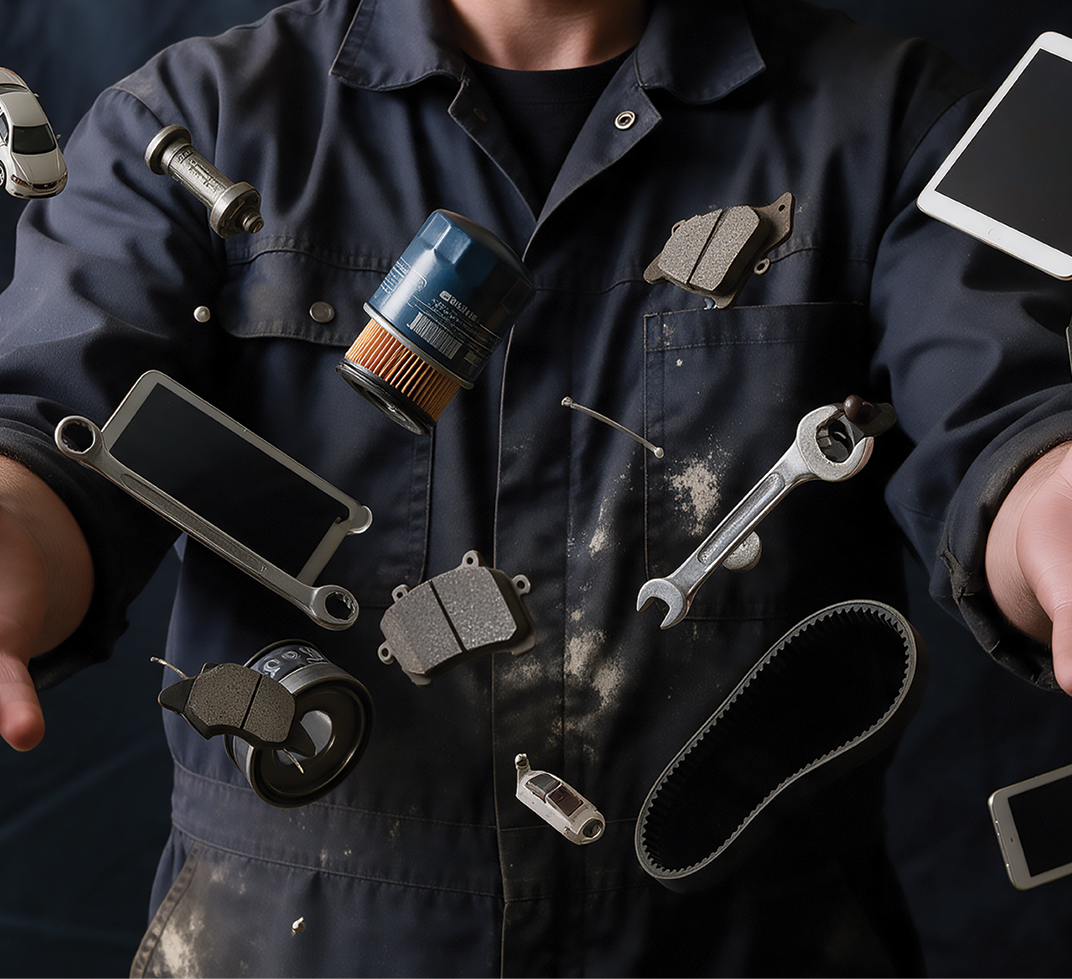
Mechanics are facing a new reality; one that is putting pressure on them and their jobbers and counterpersons.
Vehicles are becoming increasingly complex, with more advanced electronics, computer systems and sensors. The growing number of plug-in hybrids, conventional hybrids and battery electric vehicles on Canadian roads adds extra layers of complexity to their work.
To deal with this, mechanics and their shops are increasingly turning to their trusted counterpersons at local jobbers for help.
“It has gotten a lot more complicated to diagnose [vehicle] problems due to the increasing complexity and computerization of today’s vehicles, as opposed to the past,” said Douglas Squires, president and CEO of Colonial Auto Group, based in Eastern Canada. Colonial Auto Group, made up of Colonial Auto Parts and A.P.M. Limited, has locations in Nova Scotia, New Brunswick and Newfoundland.
For his counter staff, increasing complexity has meant doing more than simply taking orders and filling parts requests. They now must be knowledgeable about a wider range of vehicle parts than was expected in years past, he added.
“It has become a much more technical role,” he noted. “There used to be, say, two sets of brakes for a car or truck, standard and heavy duty. Now, there could be up to eight for one vehicle. A counterperson in the aftermarket today is expected to be an expert on all brands, as they are now expected to assist the mechanic to service all makes and models [of vehicles] and to be aware of the various intricacies of those vehicles . . . The expectations are now very high for counterpersons to have a good grasp and understanding of parts and technologies to support your professional service technician.”
This sentiment is echoed by Michael Ceolin, associate vice-president of store operations at PartSource, part of Canadian Tire Corporation.
“A counterperson used to be a trusted advisor and now it’s more of being a problem solver.”
– Michael Ceolin, associate vice-president of store operations at PartSource, part of Canadian Tire Corporation
“The need for a high quality of technical expertise is intersecting with customer service, with the counterperson being able to have intelligent conversations with their customers to not only assist them in finding the right parts but to give them insights and advice or even recommendations for the work they are doing,” said Ceolin.
In the most recent Counterperson Survey conducted by Jobber News, counterpersons said providing customers and service technicians with the right information about the vehicles they are working on is as important as providing the right part.
“Sometimes, the client does not know the information needed to get the right parts they want,” one counterperson wrote. Another added that their expertise often helped a technician or customer “find what they truly needed vs. what they actually need.”
This was especially true when helping a technician or customer who came in with incomplete or incorrect information about the vehicle being serviced. The counterpersons surveyed said their knowledge often helped prevent a technician or customer from making a mistake with a parts order — one that would have resulted in a longer repair and a dissatisfied vehicle owner.
The importance of ongoing training
All counterpersons and jobbers surveyed said they needed ongoing, up-to-date training on parts, technologies and service work for today’s vehicles to best assist service technicians.
“I think most jobbers need to invest in training and development, to provide the tools needed for people to do their jobs,” said Ceolin. “If we get the right people, the right [work] environments, the question becomes how are we giving them the right tools to make them successful on the counter and in front of their customers? That is where an investment in training comes in.”
Ceolin said PartSource provides in-house training for its counterpersons and staff so they stay up to date on the latest technologies and parts they are expected to carry and can answer questions from service technicians and customers quickly and correctly.
“Everything today is ‘I need to know now.’ This is a time where people can order something on their phone and have it delivered by the end of the day. So, we need to be quick in this fast-paced world. You cannot do that unless you provide your staff with the right tools and investment in training.”
Squires agreed and said that Colonial has “developed in-house” and has an in-house mentoring program in which new staff and counterpersons are paired with experienced senior staff to help them understand their roles, the technologies and parts they will be supplying and how best to serve service technicians and customers.
These in-house programs are critical because today’s jobbers and counterpersons cannot rely as much as they once did on parts suppliers having staff available to provide training and support.
“You seldom see supplier reps these days,” Squires said. “Today, a lot of training is done through video webinars, only that cannot replace hands-on training.”
Ceolin added that while training provides a deeper understanding of parts and vehicle technologies, it is just as important that jobbers provide customer service training.
“While continuous learning on product knowledge is critical, the customer service element, that is how to deal with a customer if they are irate about something, is just as critical,” he continued. “It is about learning how to deal with a customer’s questions, to provide them with what they are looking for.”
He added that PartSource has generally had a good relationship with its suppliers and has been able to work with them to supplement its in-house training and customer service training offerings.
“We definitely leverage the product-specific training and certification programs, technical bulletins and new product launch guides and information,” he said. “Our vendors have been very open to sharing that information with us, especially around emerging vehicle technologies, such as electric vehicles.”
Staff retention
As with any industry today, retaining staff is an ongoing challenge. This is especially true for jobbers, as many struggle to keep staff turnover to a minimum. The jobbers who answered this year’s survey pointed to the stress of the job as one reason many leave. One wrote that “the mental drain of this job is insane” and said employers needed to do a better job of ensuring there are enough staff to handle workloads so that, if people are ill, they “can take time off and not burn out the staff working.”
Both Ceolin and Squires said retaining staff is a key priority, and both companies have put incentives and support in place to attract and keep staff.
“Staffing has become more of an issue, especially since COVID, and with increasing retirements,” Squires said. “We have over the years put in various incentives to keep good people. We pay higher rates than many in the industry, and as we are a family business, when we notice things that impact families, we try to address them, such as with instituting salary adjustments to try to offset the higher costs now. We offer a pension plan and benefits, and we have sick days and vacation days more than the labour standards.”
Ceolin added that a key to keeping people is helping them feel they have a long-term career with the company and a sense of ownership in the stores where they work.
“We encourage store managers to feel like they own their store and to have pride in their store and staff. We want them to make decisions and to do what needs to be done to make their customers happy and drive sales. We have bonuses and other incentives that help them and their counterpersons to succeed and to create a supportive work culture.”


Leave a Reply