




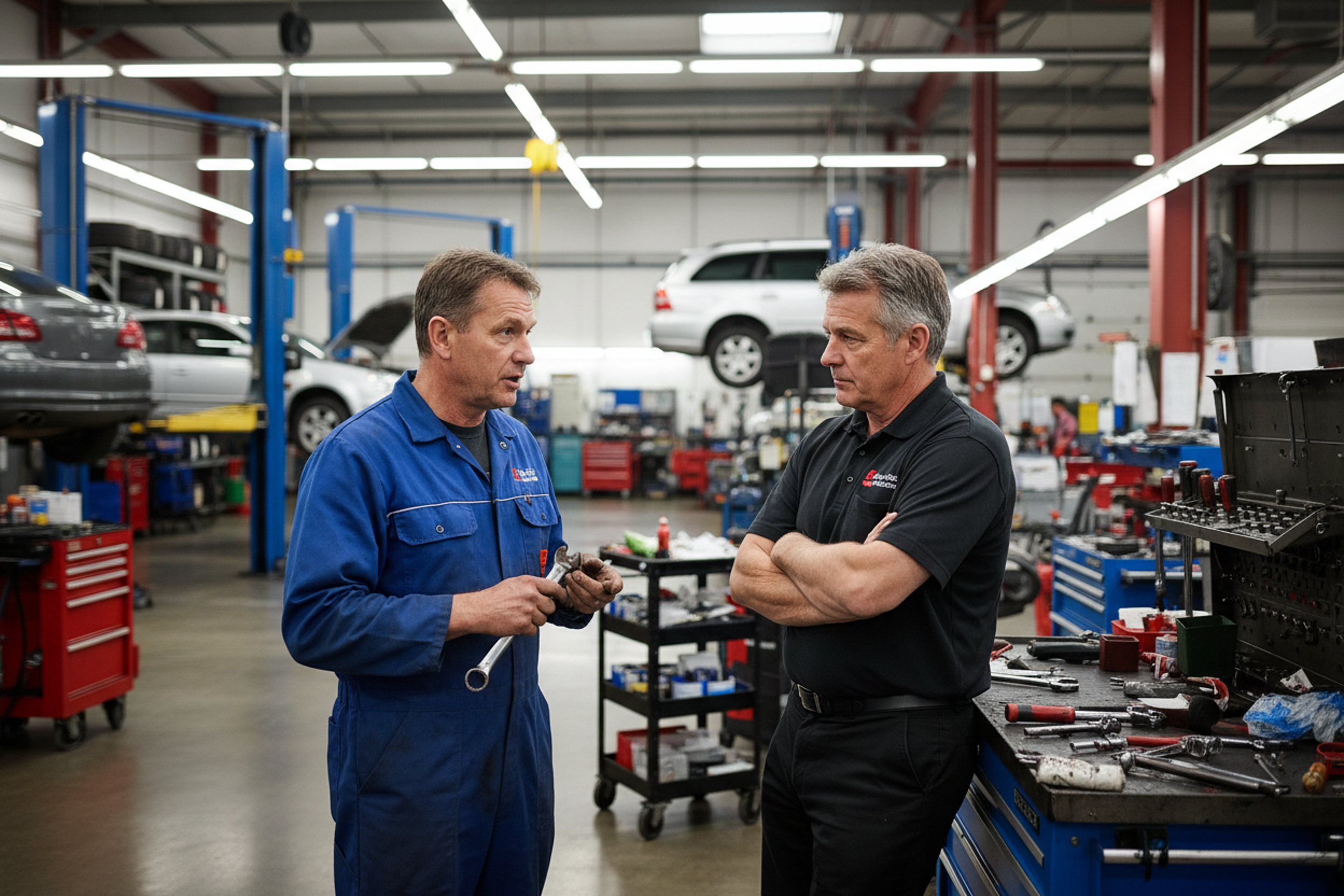
Managing stress in a shop where downtime equals dollars. Part One of a three-part series
There are days in a shop when pressure builds fast. The bays are full, the phones are ringing, parts are late and every delay costs money. Technicians feel rushed, service advisors feel squeezed, and supervisors are forced to make decisions with incomplete information.
In moments like these, stress does not stay contained to one role or one problem. It moves through the shop, shaping how people communicate, how mistakes happen, and how safely work gets done.
What’s easy to miss is that nothing may actually be “wrong” in the usual sense. The schedule might be reasonable. The team might be staffed. The work itself may not be more complex than usual. And yet, something feels tight. Conversations shorten. Questions disappear. Small delays carry more weight than they should.
In many cases, the workload has not changed. The people carrying it have. A poor night’s sleep, stress at home or several demanding days in a row can leave little room for patience or flexibility. When cumulative load is already high, even routine challenges feel heavier.
For shop owners and leaders responsible for front-line teams, this distinction matters. Stress in automotive environments is not a personal weakness or a lack of toughness. It is a predictable human response to time pressure, customer expectations, and the financial reality that downtime costs money.
When stress goes unmanaged at the team level, it quietly undermines safety, performance, morale and retention. The encouraging truth is that stress is contagious in a shop. And so is calm.
Calm does not mean avoiding urgency or lowering standards. It means staying regulated enough to think clearly while things are moving fast.
Stress is contagious in a shop. So is calm
Auto shops are deeply interdependent environments, where work flows from one person to the next. A single delay can affect multiple roles, and a small mistake can ripple quickly downstream. When pressure enters the system, it rarely stays in one place.
A single calm response can interrupt that chain reaction.
Experienced leaders develop this capacity over time. They anticipate challenges, reorganize work when needed, and buffer interruptions so they do not derail the entire day. They do not eliminate stress, but they prevent it from spreading unchecked.
This matters because emotional tone travels quickly in close-quarters environments. One person’s frustration can tighten the entire room, while a steady, grounded response can do the opposite. Calm does not mean avoiding urgency or lowering standards. It means staying regulated enough to think clearly while things are moving fast.
Research supports this. Psychologist Barbara Fredrickson’s Broaden-and-Build Theory shows that regulated emotional states expand attention and problem-solving, while stress narrows focus and pushes people into threat-based thinking. In practical terms, stress makes it harder to see options. Calm makes it easier.
When stress is framed as a shared operational challenge rather than an individual failing, stigma drops and teamwork improves.

Leadership sets the emotional climate
In many work environments, the emotional demands of leadership only become clear when pressure rises.
Teams watch closely in those moments. They notice how leaders respond when things go wrong, whether mistakes are met with curiosity or blame, whether delays are explained or simply reacted to, and whether frustration is regulated or allowed to spill out onto the floor.
These reactions matter more than they often appear.
When leaders respond with raised voices, sarcasm or visible irritation, the team’s ability to think clearly drops with them. Research shows that emotionally volatile environments narrow thinking and increase reactivity, making it harder for even highly skilled technicians to solve problems effectively.
Leaders who remain steady under pressure create what Harvard researcher Amy Edmondson defines as psychological safety: An environment where people feel able to speak up, ask questions and admit uncertainty without fear of embarrassment or punishment. Decades of research link psychological safety to fewer errors and stronger team performance.
Emotional steadiness is not about suppressing feelings. It is the ability to remain regulated enough under stress to respond intentionally rather than reactively. It is a learnable leadership skill, and in high-pressure environments, one of the most valuable ones.
Sometimes the most effective check-in is simply asking, “I have a few minutes. What would help most right now?” That help might be answering the phone, checking a delivery timeline or giving someone space to regroup.
What teams need most from leaders under pressure
When everything feels urgent at once, teams do not need more intensity. They need clarity.
Clear priorities help people focus when multiple demands compete for attention. Predictable communication reduces anxiety, especially when plans change midday. Clear role definitions matter, particularly in smaller shops where people rotate between administrative tasks, parts ordering and hands-on work.
Leaders also protect performance by knowing when to push and when to pause, even within tightly booked schedules. While most days are planned in advance, there are still critical moments when slowing a decision, reshuffling tasks or buying the team a few minutes prevents costly errors and rework. Recognizing those moments reduces mistakes and preserves trust.
Brief check-ins play an important role here. They do not need to slow the shop down. Sometimes the most effective check-in is simply asking, “I have a few minutes. What would help most right now?” That help might be answering the phone, checking a delivery timeline or giving someone space to regroup.
These small moments signal support without adding cost or complexity.
Strong teams do not happen by accident
In physically demanding, time-sensitive environments, peer support is not optional. It’s part of how work gets done safely.
Trust between technicians is built through reliability, respect, and shared accountability, not through forced bonding activities. When asking for help is normalized, mistakes decrease. When silence is rewarded, errors remain hidden until they become expensive.
Sometimes support shows up in small, human ways. One shop owner noticed how the music playing in the shop subtly shifted the mood, light enough to take the edge off a long day. Music can easily become a source of tension, but when teams treat it as a shared tool rather than a personal preference, it can help regulate energy collectively.
Some teams develop informal shorthand to signal capacity. Saying “I’m running on fumes today” or “this is one of those days” communicates where someone is at without needing a long explanation. These signals are not unprofessional. They are efficient, and they invite support before stress spills over.
Sometimes support shows up in small, human ways. One shop owner noticed how the music playing in the shop subtly shifted the mood, light enough to take the edge off a long day.
How teams support each other in real time
Teams that perform well under pressure develop a shared sense of “we’ve got this.”
That confidence comes from knowing that questions will not be met with ridicule, that someone will step in without being asked, and that speaking up early is safer than fixing mistakes later.
Psychological safety is not about comfort. It is about being able to say something feels off before a small issue becomes a costly one. Supportive team dynamics do not remove stress, but they buffer it. Over time, that buffer protects against burnout and disengagement.
Managing Conflict When Everyone Is Maxed Out: Common Questions
What kind of conflict shows up most when stress is high?
Misunderstandings, tone issues, and perceived unfairness are common. Stress shortens patience and makes people more reactive, which means small issues escalate faster.
How can leaders address conflict without making it worse?
Whenever possible, address issues privately. Focus on understanding what happened before assigning responsibility. Separate human reactions from performance expectations. Accountability does not require humiliation.
What actually helps repair trust after a tense moment?
Acknowledgment and clarity go a long way. Naming what happened, explaining what will change, and following through prevents tension from lingering and makes future conversations easier.
Practical Ways to Pressure-Proof Your Team
Pressure-proofing does not require a cultural overhaul. It requires consistent, intentional attention.
- Pay attention to tone, not just output:
Notice when the energy in the shop tightens. Small adjustments such as slowing your own pace, acknowledging effort, or introducing a moment of lightness can reset the room. - Learn how stress shows up in your team:
Some people get louder when overwhelmed. Others withdraw. Asking your team how they tend to respond under pressure allows support to happen earlier and with less friction. - Protect capacity when you can:
Not every opening needs to be filled. Sometimes leaving space in the schedule protects quality, safety, and morale in ways that outweigh the short-term gain of one more job. - Model regulation under pressure:
Your response sets the emotional ceiling for everyone else. Calm leadership gives others permission to stay focused and think clearly. - Normalize asking for help:
Make it explicit that needing support is not a failure. It is how teams stay safe, effective, and sustainable.
A Permission Slip for Leaders
If you are leading a shop where downtime equals dollars, here is a permission you may not realize you need: You do not have to choose between performance and people.
Pressure will always exist. What matters is how it is managed. Calm leadership is not softness. It is operational strength.
For shop floor leaders, it helps to ask owners or senior management a few clarifying questions:
- What kind of environment am I trusted to create on the floor?
- How much flexibility exists within booked schedules when safety or quality is at risk?
- How are productivity expectations measured over time, not just day to day?
- What does success look like beyond the numbers?
Clear answers give leaders the authority to manage pressure intentionally rather than reactively.
In shops that understand this, the work does not just get done. It gets done better, safer, and by people who want to stay.
Darrah Wolfe is a performance and leadership Coach at One Life Counselling & Coaching. She empowers her clients to discover clarity, meaningful purpose, and a deep well of inner vitality, enabling them to live according to their own definition of a life well lived.
Images credit: Depositphotos.com






Leave a Reply