

Analysis: Rebuilding the aftermarket
Share

View the latest digital editions of all of our publications or head straight to the archives

Share
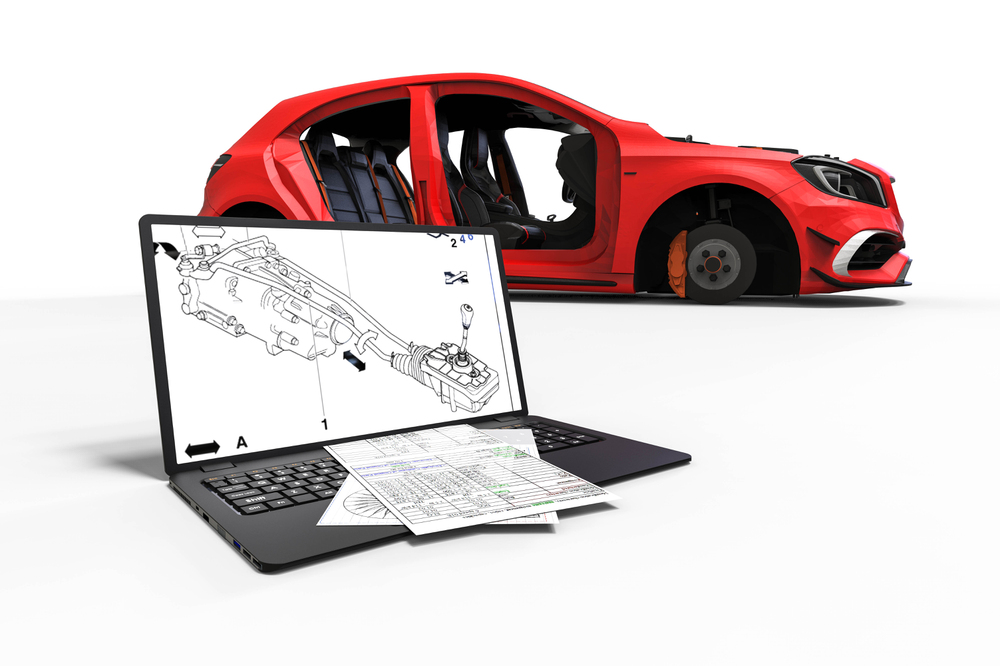
For decades, the automotive aftermarket has revolved around a deceptively simple question: Will this part fit my car? It is the first thing every driver wants to know and the final hesitation before every purchase, yet it remains one of the least reliably answered questions in the entire industry.
That uncertainty is not a minor inconvenience. It is the single largest source of friction across a $300 billion global market, driving abandoned purchases, costly returns and a persistent lack of trust between consumers, retailers and brands.
What makes this especially striking is that the problem is not one of demand or even supply. The aftermarket is vast, with millions of parts available across thousands of manufacturers. The real issue is that much of this inventory is effectively invisible in the modern digital economy. Products lack structured fitment data, standardized descriptions, and machine-readable attributes, making them difficult for search engines, marketplaces, and AI systems to interpret. If a product cannot be understood, it cannot be found. And if it cannot be found, it cannot be sold.
This is why the aftermarket’s biggest constraint is not commercial but infrastructural. At its core, this is a data problem.
Every major digital category has gone through a transformation where messy, inconsistent information was turned into structured, accessible data. That shift enabled platforms to scale, search to become reliable and discovery to improve dramatically. The automotive aftermarket never experienced that moment. Not because of a lack of ambition, but because the underlying challenge is uniquely complex.
Fitment is not a simple relationship. A part does not just fit a make and model; it depends on year, trim, engine type, transmission and often subtle variations in production. Increasingly, it also depends on how a vehicle has been modified over time. Historically, capturing this level of detail required enormous human effort, with teams manually interpreting fitment charts and building catalogs line by line. The process was slow, expensive and fundamentally unscalable, which meant the industry never developed a complete or reliable data layer.
At Motormia, we approached this problem from a different starting point. Instead of trying to optimize listings, we asked what the aftermarket would look like if its data layer actually worked. To answer that, we rebuilt it from the ground up, creating what is now the largest digital knowledgebase for cars and aftermarket parts ever assembled. Today, that system spans more than five million parts across over four thousand brands, mapped against more than 75,000 vehicle configurations and over 50 million fitment records.
The importance of this is not just scale but structure. When data is properly connected and continuously updated, it stops being a static catalog and becomes an intelligence layer that can power discovery, decision-making and commerce.
One of the key limitations of traditional aftermarket data is that it treats fitment as a fixed problem. In reality, vehicles are dynamic systems. They evolve through modifications, upgrades and real-world usage. Any meaningful understanding of compatibility has to reflect that.
This is why we built a fitment intelligence system that goes beyond mapping parts to stock vehicles. It understands the car as it actually exists, incorporating prior modifications, real-world build data and compatibility pathways between components. This allows for recommendations that are not just theoretically correct but contextually relevant to the specific vehicle in question.
Equally important is the feedback loop that reinforces this system. Every search, installation, and correction contributes new information, refining accuracy over time. The result is a continuously improving dataset that reflects how vehicles are built and modified in the real world, rather than how they were originally designed in isolation.
This shift from static data to living intelligence has implications far beyond better product listings. It enables precise search, reduces returns, improves trust and unlocks new forms of discovery that were previously impossible. It also expands the market itself by bringing previously inaccessible inventory, including boutique and performance brands, into a structured and searchable ecosystem.
Advances in AI have fundamentally changed the economics of building and maintaining this kind of data. What once required significant human effort can now be done in a fraction of the time and cost, making it possible to structure entire catalogs at scale. For the first time, the idea of a complete, continuously improving aftermarket data layer is not theoretical but achievable.
This matters because commerce is increasingly mediated by machines. Search engines, marketplaces, and AI assistants do not browse; they interpret. And they can only interpret what is structured, consistent and reliable. As a result, data is no longer a supporting function but the primary infrastructure that determines how products are discovered and purchased.
The implications are profound. The companies that define the future of the aftermarket will not simply be those with the most inventory, but those with the most accurate and comprehensive understanding of fitment. Solving this problem removes friction from every transaction, turning uncertainty into confidence and unlocking demand that has always existed but has never been fully captured.
There is also a narrow window of opportunity. Data compounds, and the first platform to achieve meaningful scale gains an advantage that becomes increasingly difficult to replicate. The more relationships are built between parts and vehicles, the smarter the system becomes, and the wider the gap grows.
At Motormia, our ambition is to build the intelligence layer that powers the entire aftermarket. Not just a marketplace, but the underlying system that makes every product discoverable, every fitment decision reliable, and every recommendation contextual. Because once the data layer is fixed, everything else accelerates. The aftermarket does not need more products. It needs a better understanding of the ones that already exist. Fix that, and you do not just improve the industry. You redefine its foundation.
Isaac Bunick is the CEO of Motormia
Image credit: Depositphotos.com




Leave a Reply