
Opinion: When fuel gets expensive, enthusiasts get smarter
Share

View the latest digital editions of all of our publications or head straight to the archives

Share
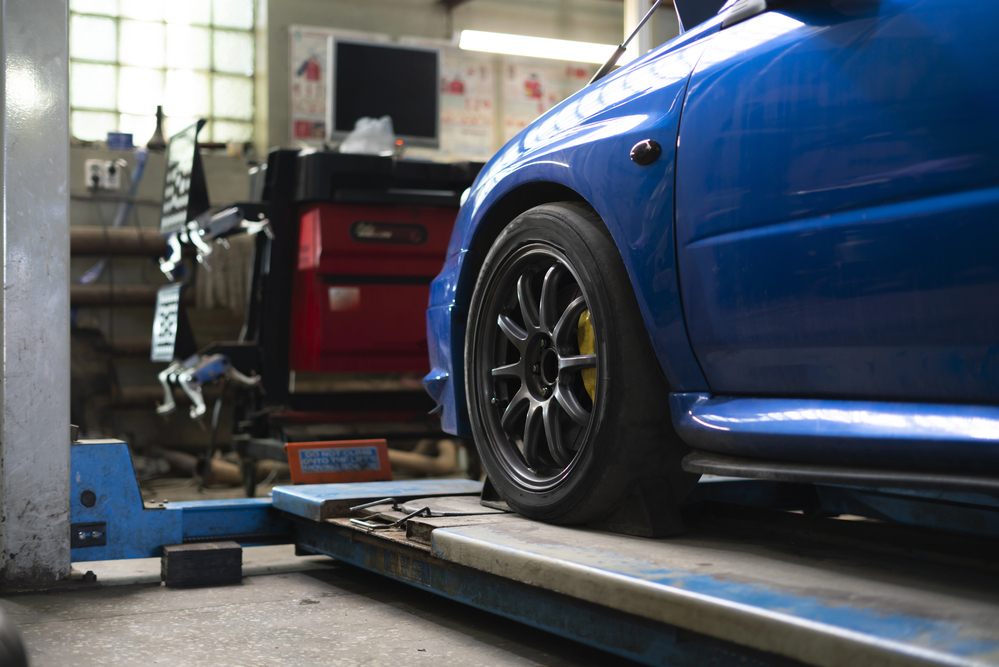
Last month, geopolitical instability around the Strait of Hormuz sent shockwaves through global oil markets, pushing fuel prices upward. Conventional wisdom says that when fuel prices spike, people drive less, spend less and performance culture quietly retreats until costs stabilize.
It is a logical narrative that fits macroeconomic models and headline cycles. But it doesn’t reflect what is actually happening with car enthusiasts, whose shopping patterns tell a different story.
At Motormia, where we track real-world behaviour across the aftermarket ecosystem, we have observed a clear and somewhat counterintuitive shift over the past two weeks. As fuel prices began to rise, demand for ECU tuning increased by roughly 40 per cent. Fuel pump upgrades followed with a nearly identical surge of 35 per cent.
On the surface, this seems paradoxical. Why invest in performance when the cost of fueling that performance is climbing? The answer lies in a fundamental difference in mindset. Most drivers respond to higher fuel costs by reducing consumption. Enthusiasts respond by optimizing it.
It marks the difference between disengaging from a hobby and deepening one’s involvement in it. Rather than spending more on fuel and miles driven, enthusiasts are reallocating that spend toward the machine itself, extracting more performance, more responsiveness and, increasingly, more efficiency from every gallon.
The modern vehicle makes this shift not only possible but inevitable. Today’s engines are governed as much by software as by hardware. Factory calibrations are intentionally conservative, designed to accommodate a wide range of global conditions, including fuel quality, emissions standards, climate variability, and long-term durability. In doing so, they leave meaningful headroom untapped.
ECU tuning accesses that margin. By refining ignition timing, optimizing air-fuel ratios, and recalibrating boost and throttle response, a well-executed tune can transform how an engine behaves. The gains are not limited to horsepower. In many cases, tuning also improves efficiency, delivering more usable performance from the same unit of fuel. In an environment where fuel is expensive, that dual benefit becomes particularly compelling.
The parallel rise in fuel pump upgrades reinforces this broader pattern. Increased airflow and higher boost demand more precise and consistent fuel delivery. What begins as a software optimization quickly evolves into a system-level upgrade path: Fuel systems, cooling, airflow, and beyond.
This is where the nature of enthusiast engagement is changing. The focus is shifting away from isolated modifications toward integrated performance systems. It’s less about adding power in increments and more about engineering balance across the entire vehicle.
For the aftermarket industry, particularly in markets like U.S. and Canada where both fuel costs and vehicle longevity play a significant role in consumer behaviour, this shift has important implications. It suggests that demand is more resilient than it appears on the surface. Enthusiasts evolve with the market, becoming more deliberate, more technical and more efficiency-minded.
This evolution, however, introduces new complexity. Modern vehicles are intricate systems where one modification often necessitates several others. An ECU tune may require a fuel system upgrade. Increased performance may demand improved cooling or drivetrain reinforcement. Navigating these dependencies has historically been a fragmented process, relying on forums, anecdotal knowledge, and trial-and-error.
That approach is increasingly inadequate for the level of sophistication modern vehicles demand. At its core, Motormia was built in response to this exact challenge. By understanding each vehicle as a complete system — its specifications, its existing modifications and its potential upgrade paths — we leverage wisdom to guide enthusiasts toward smarter, more coherent builds. Not just more power, but better performance per gallon. Not just more parts, but the right combination of parts.
What we are witnessing is not a contraction of car culture, but a maturation. External pressures, like rising fuel costs, are accelerating a transition that was already underway: From consumption-driven enthusiasm to optimization-driven engagement.
The enthusiast isn’t stepping away from the machine … they’re getting closer to it. And this may be the most important shift of all.
Isaac Bunick is the CEO of Motormia
Image credit: Depositphotos.com



Leave a Reply