


Succession planning doesn’t mean you’re ready to hang up your boots and leave the shop you built. It means you’re ready for anything you have your heart set on, according to a shop coach.
That could mean enjoying days on the golf course, going back to your passion in the bays or something in between, explained Bryan Stasch, vice president of program and content development at the Automotive Training Institute.
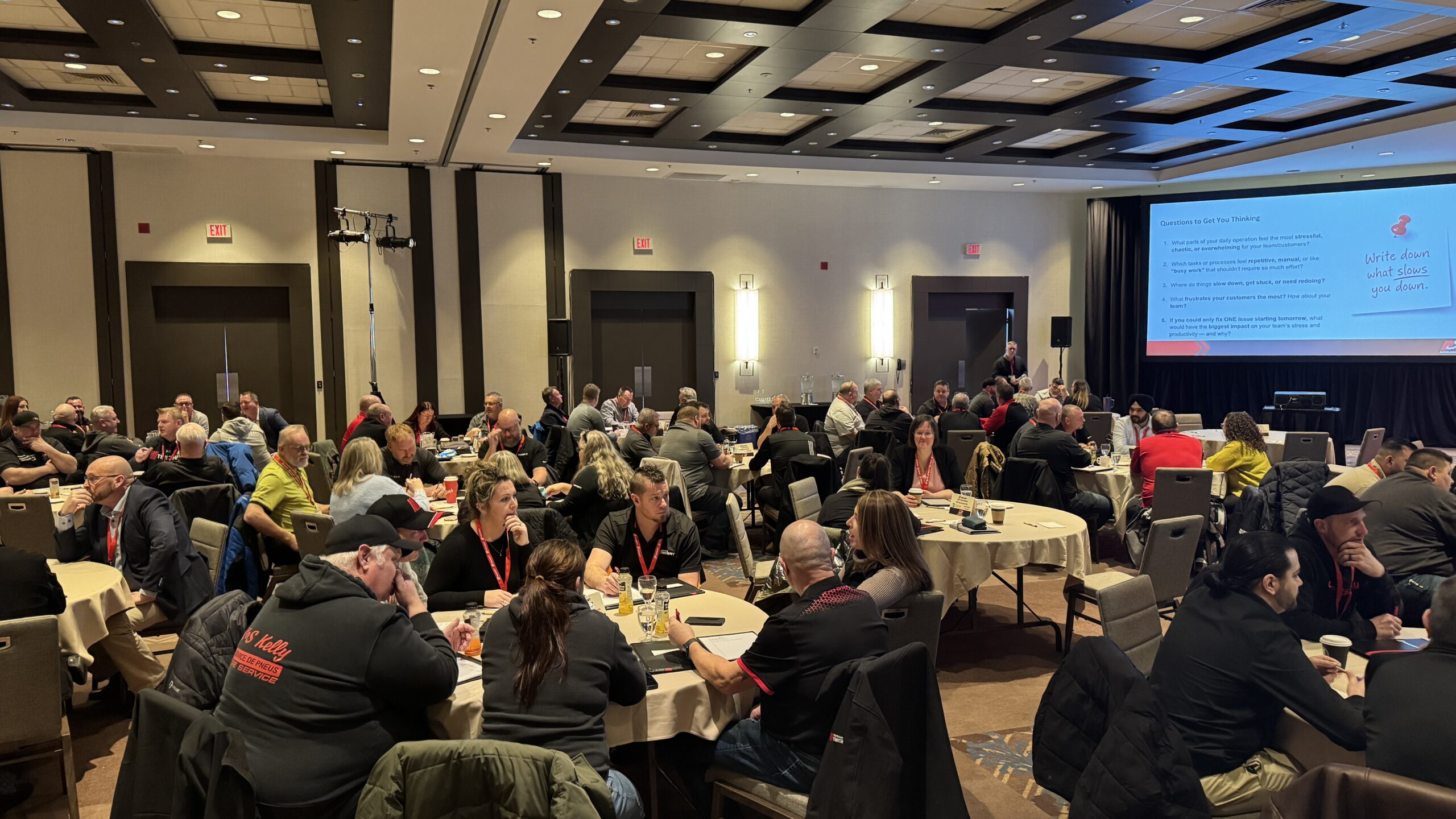
“People take that term ‘succession planning’ as if ‘That’s when I’m ready to retire.’ I call B.S., because building a safe succession or strategic succession plan is really one of many options for helping a business owner determine what that exit might look like,” Stasch said during his talk at the Midwest Auto Care Alliance Hi-Tech Training & Expo.
“But in reality, building a great succession plan puts a business and a business owner in a position to sell, yes, [and] to turn it over to the next generation.”
But it’s not just about planned exits. Stasch shared a story about a shop owner who died in a tragic collision. His wife was the bookkeeper, one son ran the tire shop, the other ran the mechanical side — but only one person knew how to run the whole business. And he was now gone.
“That business almost went belly up, and it took about seven, eight months to get their feet back underneath them. That’s what we call an unplanned exit,” he said during his session, Maximizing Profitability and Return on Equity in Automotive Repair Shops.
That’s why, he said, succession planning is really about preparing the next person for every role in the shop.
Stasch also introduced a concept he calls “the mascot.”
“What do you want to be when you grow up? I use a term called mascot. Some people love it; some not so much. And when I say mascot, I am not talking about somebody that throws on some goofy outfit, runs up and down a basketball court or football field and athletic pool.”
His version of a mascot is the shop owner who’s built a strong team and no longer needs to be there at the crack of dawn. But they still show up.
“You have a great team, a great bunch of people that open the business, get it ready to rock and roll and get things rolling for the day. And then the business owner shows up and heads to the front office, B.S.’s with a couple customers or two. Drops a customer or two off, writes up a ticket. And they do it, why? Because they want to, not because they have to.”
He painted a picture of a relaxed, engaged owner who checks in with staff, reviews the business, and is out by lunch.
“Then they go hang out in the bays with the techs. B.S., around a little bit: ‘How’s the family, how’s the kids, how’s life, anything I can do to help you, what’s going on, you got any plans for the weekend?’” he continued, again stressing the ‘wanting to’ over the ‘having to’ lifestyle.
“Then you head back into your office, you move your money around, you check your marketing strategy, you do your repair order audits, couple other things,” he said. “And you’re out of dodge by 11 o’clock. To me, that’s a definition of a mascot.”
He closed with a challenge to the room: “How many of you want to be a mascot? How many of you really like the thought of being a mascot? I can promise you this: You’ll probably make more money and have a whole lot more fun being a business owner that way than you would having daily responsibilities.”
Image credit: Depositphotos.com







Leave a Reply