




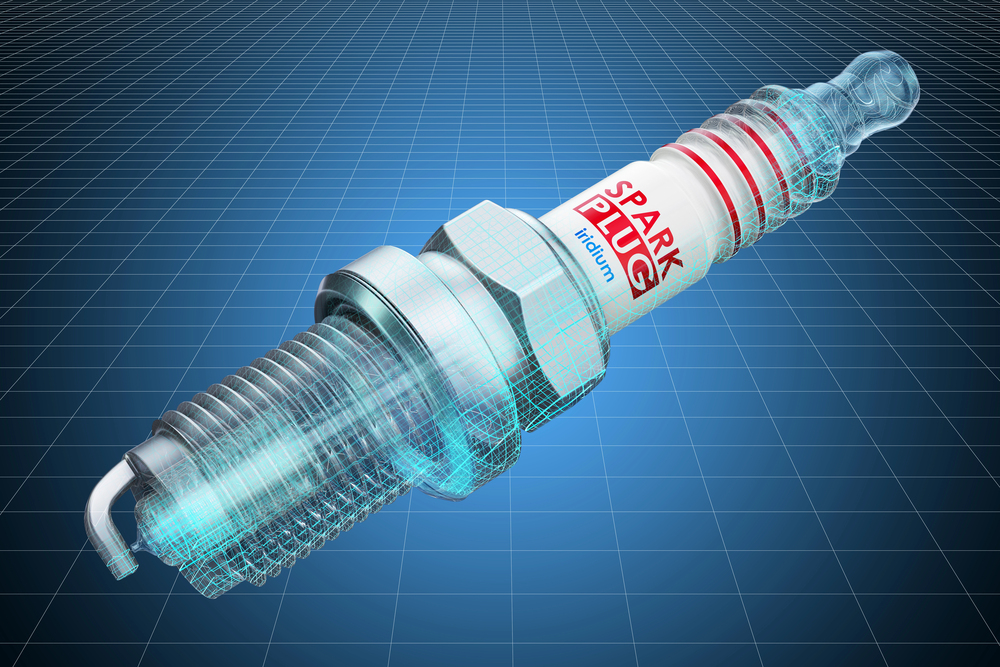
Automotive aftermarket suppliers are being told to prepare for a shift when it comes to the visual content of their products.
Many industries have shifted away from 360-degree photography to 3D models, and it’s only a matter of time until that becomes the standard in this sector.
Ian McNabb, head of product at Visual SKUs, said some retailers are already requesting 3D models of parts, and he expects that trend to spread into the automotive aftermarket.
“I’m going to make a statement here: 3D models will be the next standard,” he said at the recent MEMA Aftermarket Technology Conference.
He noted that there are already retailers requesting 3D models, “albeit it’s not in the automotive aftermarket today, but they do carry automotive parts. So it won’t be long before the dedicated automotive retailers will be asking for the same thing.”
McNabb said the automotive aftermarket is well-positioned to provide 3D models because many manufacturers already have CAD data and engineering models. Those resources can serve as a base for 3D assets that will be shared in e-commerce.
He also pointed to recent investment in 360 and so-called 3D photography and said advances in artificial intelligence and photogrammetry will help companies convert that work into 3D models. He told attendees that existing spins and image sets can be used to generate models, and while the results may not be perfect today, he expects gaps to close within months.
McNabb said 3D models can be used for augmented reality fitment, installation instructions and as digital twins to support in-house photography and e-commerce needs. He argued the key will be integrating 3D into existing workflows alongside 360s and stills, supported by a digital asset management system that can handle new formats.
For some in the audience, the move to 3D is seen as a way to deal with the heavy load created by current rich media. One attendee said their company has more than one million assets and had heard that 360 spins and 3D-style photography are “almost dead in the water” outside the aftermarket. McNabb did not say they were finished, but noted they are “dying quick” outside automotive.
He highlighted the strain large image sets place on infrastructure. McNabb said the volume of visuals in the 10 to 20 terabyte range can “destroy” FTP sites. He argued that net changes, rather than full catalogue refreshes, are “imperative” so receivers are not forced to repeatedly process huge files from multiple manufacturers.
File size is one reason he expects 3D models to gain ground. He said a three-plane, 24-frame 360 spin can reach 200 megabytes or more, depending on resolution, while a 3D model of the same item can range from 1 to 1.5 megabytes.
That’s “a better solution than 360 photography, because they don’t have to deal with the volume and the mass,” McNabb said.
McNabb also said a digital twin could change production. With a 3D model, he said, manufacturers would no longer need to ship physical parts to a photography studio. Instead, they could place the digital part on a virtual stage, capture as many angles as needed and adjust lighting and other conditions as if working with a physical part.
Image credit: Depositphotos.com





Leave a Reply