
Hybrids extend lead as preferred alternative to ICE
Share

View the latest digital editions of all of our publications or head straight to the archives

Share
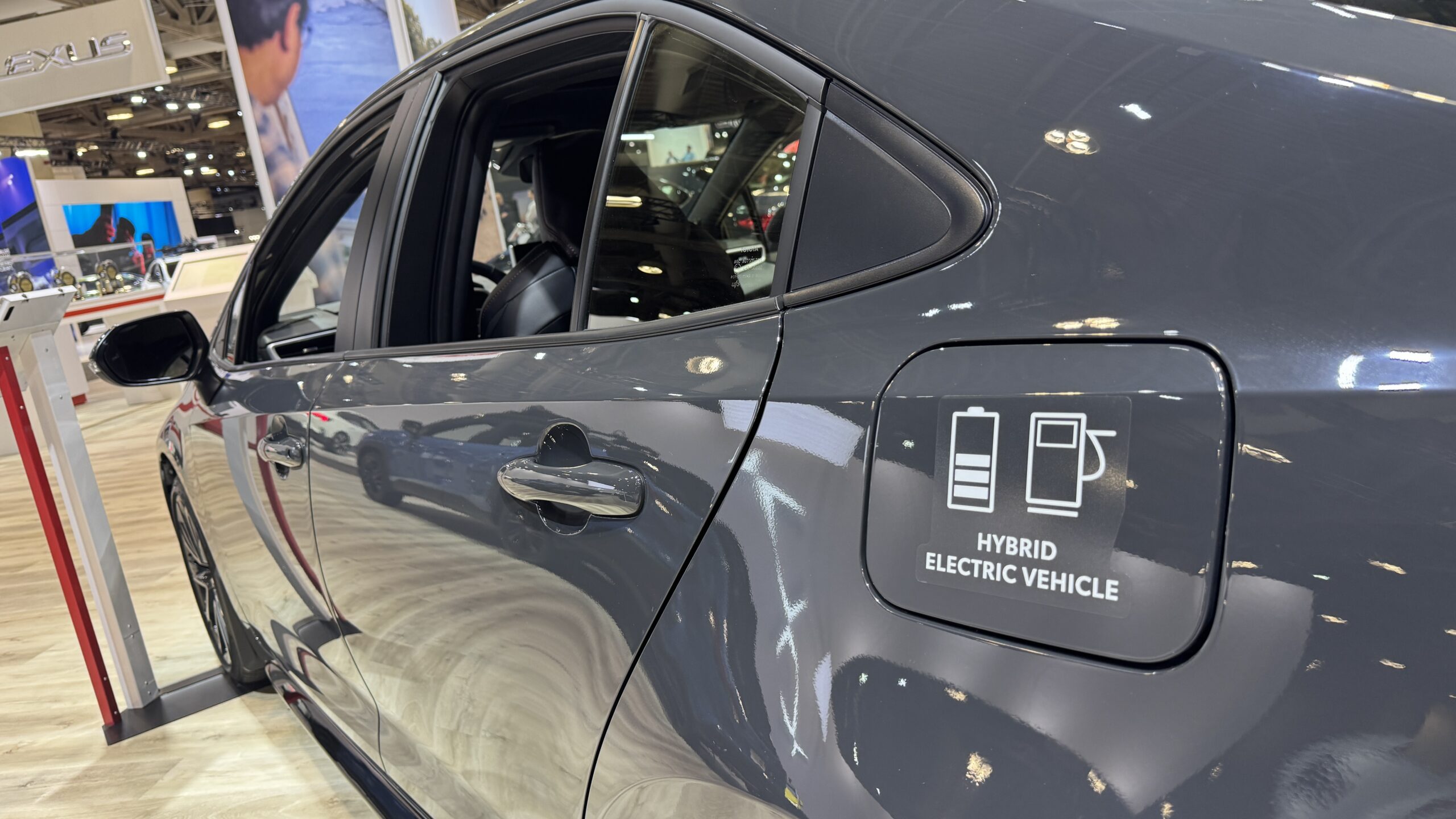
Hybrids ended 2025 as the clear winner in Canada’s powertrain race, while zero emission vehicles pulled back and internal combustion regained ground, according to S&P Global Mobility’s fourth-quarter Canadian Automotive Insights.
The annual data shows combined hybrid share, full and mild, rose 31.3 per cent year over year to a record 17.2 per cent of the market, up from 13.3 per cent in 2024. Full hybrids led the charge, increasing 36.8 per cent to 13.0 per cent for the full year. Hybrid momentum held through the fall, with combined share reaching 17.5 per cent in the fourth quarter.
At the same time, zero emission vehicles faced a policy-driven correction as federal and provincial rebates paused or were reduced for much of the year. ZEV share fell to 10.3 per cent in 2025 from 15.4 per cent in 2024, a contraction of 31.9 per cent. Battery electric models saw the steepest drop, to 6.7 per cent from 11.4 per cent, down 40.5 per cent year over year.
There was some late‑year stabilization. ZEVs rose to 12.1 per cent in the fourth quarter, up from 10.5 per cent in the third, suggesting buyers and brands began to adjust to the post‑incentive landscape.
S&P noted that the story is not a retreat from electrification, but a recalibration toward the practicality and immediate efficiency of hybrids. It also marks the first time in years that internal combustion gained annual market share.
Provincial trends showed what S&P called “a tale of two Canadas.” Quebec and British Columbia, long ZEV leaders, saw the sharpest corrections as incentives changed and buyers pivoted to hybrids.
In Quebec, ZEV share fell to 18.5 per cent in 2025 from 32.9 per cent a year earlier. Hybrid share nearly doubled, to 13.4 per cent from 8.2 per cent, pointing to direct substitution when rebates were less generous.
British Columbia’s ZEV share slipped to 18.3 per cent from 22.8 per cent. Hybrids accelerated to 20.9 per cent from 16.1 per cent, the highest hybrid penetration in the country. B.C. is now the only major province where hybrid share exceeds ZEVs.
Ontario, the largest market, became a hybrid powerhouse. ZEV share edged down to 6.8 per cent from 8.4 per cent, while hybrids rose to 19.7 per cent from 16.2 per cent. By both volume and share, hybrids carried the transition in the province.
On the Prairies, hybrids gained traction as ZEVs held low single digits. Alberta’s ZEV share moved to 4.4 per cent from 5.0 per cent, while hybrids reached 16.6 per cent. Saskatchewan fell to 2.5 per cent ZEV share from 3.1 per cent, and hybrids climbed to 12.4 per cent. Manitoba posted a combined hybrid share of 15.1 per cent.
Atlantic Canada showed a unified pattern. Provinces such as Prince Edward Island and New Brunswick, which had relatively high ZEV shares in 2024, saw corrections in 2025. Hybrids filled the gap, with combined shares of 16.3 per cent in P.E.I., 14.0 per cent in New Brunswick and 14.6 per cent in Nova Scotia.
S&P characterized 2025 as “a year of profound recalibration.” Hybrids became the bridge technology of choice for most Canadians, ZEVs adjusted to a changed policy environment, and internal combustion steadied as buyers weighed cost, charging and daily use.
With Q4 ZEV share improving and hybrid momentum still strong, the firm said 2026 begins with a powertrain mix that reflects regional realities and consumer pragmatism.



Leave a Reply