



A service shop’s best defence against price shopping is to make the customer experience so strong that clients never think to compare, according to a shop owner and coach.
Alysa Beech, a customer experience strategist with Beech Consulting and co-owner of Upper James Autopro in Hamilton, Ontario, said many shops still rely on discounts and sales to attract business, even though those tactics often mask an average experience.
She said research found that businesses reported a low correlation between satisfaction, spending and loyalty.
“Extremely satisfied customers were defecting,” she said during the Tirecraft 2026 conference. “They were defecting at the same rate as the low satisfied [customers]. Satisfaction, in and of itself, was not enough.”
When tracking emotional terms such as confidence, integrity, pride and passion, researchers saw direct correlation between those feelings and customer loyalty and spending, Beech observed.
“The goal here is not to make price irrelevant so we could charge whatever we wanted,” she pointed out. “The goal is to make price less relevant so that your customer has no idea that somebody down the street charges for a tire swap.”
Beech contrasted two experiences in her own life. She said she has a single hairstylist she is loyal to and doesn’t know what others in her town charge — but she knows the prices at every dog groomer.
“There’s no sticking power to ‘fine,’” she said of her grooming experiences. “I will go look for a better price. And when it comes to ‘fine,’ I will go look for a better price, and so will your clients.”
She described traditional advertising, sales and discounts as “the tax you pay for offering an average service,” arguing that the industry is shifting from a price war to what she called an “experience war.”
To win that battle, Beech said shops need intentional, process-driven systems that create predictable, reassuring interactions. Her own shop mapped every step of the customer journey and found the biggest pain point was not the sales call itself, but the silence between vehicle drop-off and the consultation.
“Uncertainty triggers anxiety,” she said, noting that people crave predictability even when the news is bad.
Beech pointed to an example where study participants were asked if they would rather receive an electric shock immediately or possibly later. She said 95 per cent chose to receive the shock right away to avoid the stress of waiting.
In response, her shop introduced mandatory, scheduled updates for every customer, primarily by text. Clients are told when the vehicle will enter the shop, when the inspection will be done and when to expect the next update, even on days when the shop is behind.
“People would rather know the bad news right away than have to sit and wait in the discomfort of what’s to come,” she said.
By turning communication into a system, Beech said her team reduced customer anxiety and positioned the shop as a trusted guide, rather than another commodity provider to be shopped on price.
“It’s in the experience where your brand will live or die,” she said. “Amazing customer experience won’t just happen by itself. It needs processes in place. It needs that kind of structural commitment systems in place to make it happen.”
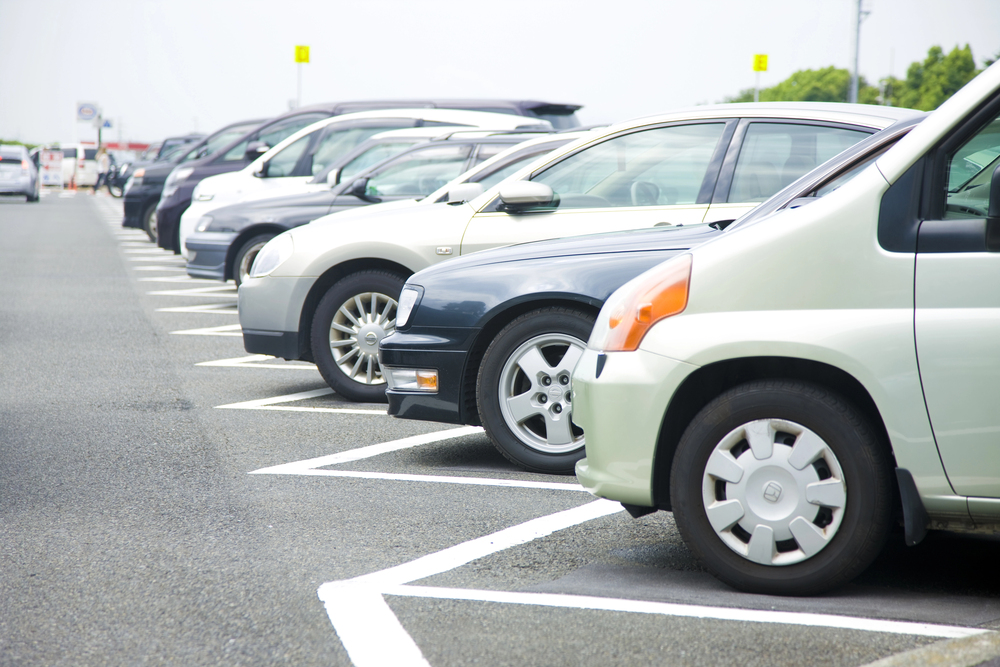
Image credit: Depositphotos.com
Related Posts





Comments
-
The customer experience starts at the front counter. Incoming calls and face to face contact will make or break an experience. Independent shops have a distinct advantage over dealerships when developing a relationship with customers. Communication is the most important part of dealing with customers. Front counter staff should be well versed in automotive services so as their knowledge will help cement a relationship. People will pay for excellent service and quality repairs. Shops that attract these types of consumers have a higher retention rate than shops that are price focused. Answering all questions properly will gain trust.

Leave a Reply