
From the Magazine: Turbulence, tariffs and the road ahead: What shop owners need to know
Share

View the latest digital editions of all of our publications or head straight to the archives

Share

It has been a turbulent start to 2026. Between a war in the Middle East, surging energy costs, trade disruptions and a softening domestic labour market, there is no shortage of macro noise for Canadian shop owners to process.
The challenge, as always, is separating signal from noise — understanding what actually matters for your business and where to focus your energy.
Let’s start with the headline numbers. Statistics Canada reported February CPI at 1.8 per cent year-over-year, down from 2.3 per cent in January and below consensus. Core inflation measures dropped to four-year lows. On the surface, encouraging. But that data was collected before the U.S. strikes that began February 28and before crude oil prices went from roughly $70 a barrel to over $100, with Brent briefly touching $120. The February print is already stale.
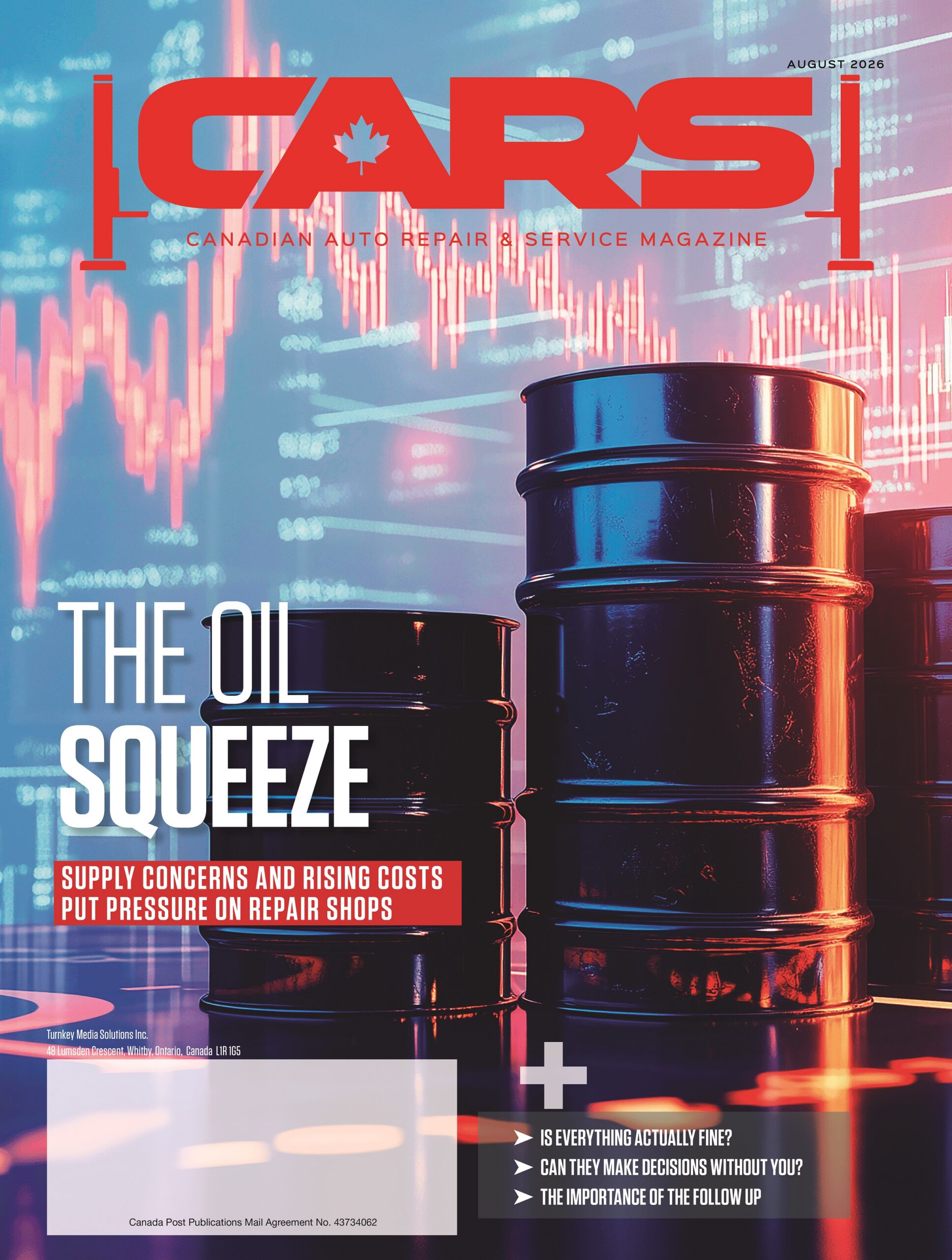
The conflict in Iran has disrupted roughly 20 per cent of global oil supply flowing through the Strait of Hormuz. Gasoline prices have surged, and the IEA projects global oil supply to plunge by eight million barrels per day in March. The longer elevated oil prices persist, the more that pressure gets passed on to consumers and businesses. March CPI will almost certainly reverse the disinflation trend.
This puts the Bank of Canada in a difficult position. The policy rate sits at 2.25 per cent after being held steady in January, and further holds are widely expected. The Bank is caught between two forces: Rising unemployment (the economy lost 84,000 jobs in February, pushing the rate to 6.7 per cent) and a looming energy-driven inflation shock that hasn’t yet hit the data. Rate cuts would help demand but risk stoking inflation. Rate hikes would cool prices but punish a fragile labour market. The likely outcome is that rates stay right where they are for the foreseeable future.
What does all of this mean for the automotive aftermarket? For our industry, the picture is nuanced but, frankly, more favourable than it is for many sectors.
Start with vehicle sales. TD Economics projects new vehicle sales will fall 4.3 per cent this year, weighed down by affordability constraints and trade uncertainty. The average new vehicle in Canada now costs more than $63,000, with monthly payments hovering around $1,000. Add cross-border tariffs and stalled financing conditions and fewer Canadians will be driving new cars off the lot. That’s a direct tailwind for the aftermarket: Vehicles stay in service longer, maintenance intervals accumulate and repair demand grows.
Higher fuel costs also tend to suppress discretionary driving, which can modestly reduce kilometres driven in the short term. But the structural reality remains: Canadians depend on their vehicles, the national fleet is aging and deferred maintenance eventually comes due, often as a more expensive repair than the service it replaced.
Supply chain pressures are another factor to watch. Disruptions in the Strait of Hormuz don’t just affect crude; they impact petrochemicals, polymers and the raw materials feeding global parts manufacturing. Shops should expect some tightness in parts availability and plan inventory accordingly.
But here is where I want to shift the conversation: The most important variable in your business is not oil prices, interest rates, or CPI. It’s what’s happening inside your four walls.
Periods of external volatility are precisely when the best operators separate themselves. When the macro environment is unpredictable, the businesses that win are the ones that double down on what they can control: Process and people.
Process means looking hard at your workflow. How efficient is your intake? Are your service advisors presenting comprehensive inspections or just writing up the complaint? Are you tracking key metrics, like hours per repair order, effective labour rate, parts-to-labour ratio, and using them to drive decisions? When consumer spending tightens, every dollar of revenue left on the table matters more.
People means investing in your team. Retention is cheaper than recruitment, and your best technicians and advisors are your competitive moat. Create an environment where people want to show up, where they feel ownership over outcomes and where communication is clear. The shops that build strong cultures don’t just survive downturns — they use them to recruit talent that shakes loose from weaker operations.
The macro environment will sort itself out. Oil prices will normalize, rate decisions will be made, and geopolitical cycles will turn. The aftermarket fundamentals remain strong: An aging fleet, constrained new vehicle sales and consumers who depend on reliable transportation.
Your job is to be the shop that captures that demand, and that starts with running the tightest, most people-centred operation you can.
Control the controllables. The rest is noise.
Zakari Krieger is the Fix Network, Canadian vice president of Prime CarCare, responsible for the Canadian retail business, encompassing the Speedy Auto Service and Novus Auto Glass business lines
This article originally appeared in the April issue of CARS magazine








Leave a Reply