

Why door locks and window regulators became a service growth niche
Share

View the latest digital editions of all of our publications or head straight to the archives

Share
A customer rolls in because the driver door will not lock from the fob. Most shops would treat that as a five-minute courtesy fix and move on. The smarter play is to recognize what just walked through the bay: the leading edge of a service category that has quietly turned into one of the most repeatable, high-margin jobs an independent shop can sell.
The math behind the trend is not subtle. S&P Global Mobility put the average age of a U.S. light vehicle at 12.8 years in 2025, with passenger cars averaging 14.5 years and roughly 289 million vehicles on the road. Vehicles from the heavy 2015 to 2019 sales years are now well out of warranty and into the independent aftermarket. Those are exactly the model years when power locks, one-touch windows, and keyless entry became standard equipment on nearly everything, including the economy trims.
Door lock actuators and window regulators are wear items with a clock on them. The actuator is a small electric motor turning plastic gears that cycle every time the door opens. The regulator is a cable or scissor mechanism that drags the glass up and down under load. Neither was built to run for fifteen years, and once a fleet ages past a decade, these parts start failing in volume rather than as one-offs.
The broader spend is moving with the fleet. The Auto Care Association and MEMA Aftermarket Suppliers project the U.S. light-duty aftermarket to grow 5.2 percent year over year and pass $500 billion by 2029, and they name an aging fleet and rising vehicle complexity as two of the three structural drivers. The rising average age of vehicles is the fuel, and lock and window work sits right in the path of it.
What makes this category worth building around is the margin profile. A door lock actuator job is bounded. The part is inexpensive relative to the labor, the diagnostic path is well understood, and the labor is door-panel removal plus actuator swap and a function test. You are not chasing an intermittent network gremlin across the whole car. You quote it, you fix it, the customer drives away the same day, and the comeback rate is low when the root cause is identified correctly.
The trap is treating every lock or window complaint as a parts-cannon job. A door that locks from the switch but ignores the fob is not always the actuator. It can be the body control module, a chafed wire in the door jamb wiring where it flexes thousands of times, or a security-system fault. European platforms add another layer. Many use deadlocking, an anti-theft mode that double-locks the latch and demands precise calibration to behave correctly. Throwing an actuator at that problem without scoping the module or the door wiring first is how a profitable job turns into a warranty headache.
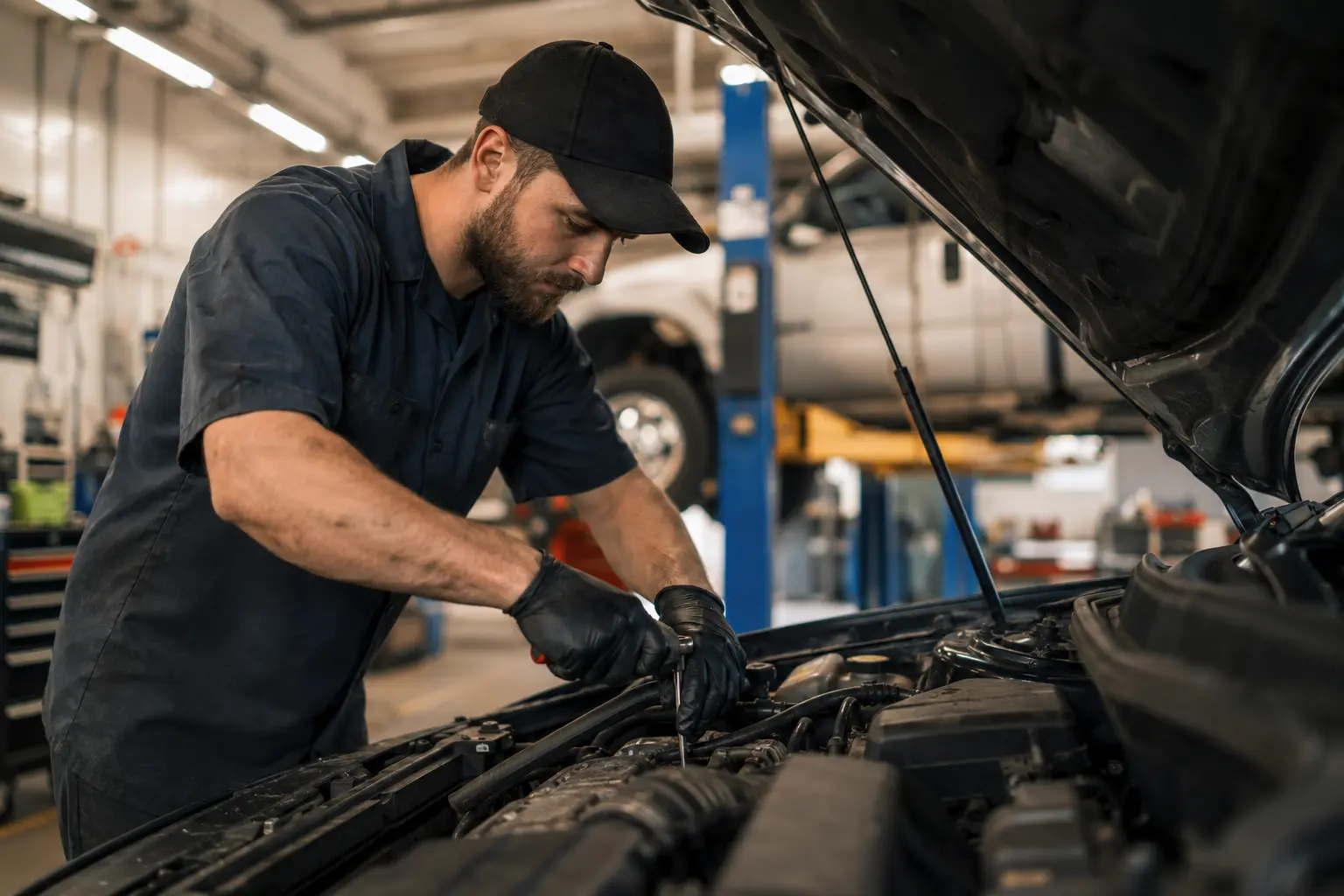
This is the part of the work that justifies the labor rate. A shop that pulls the door card, checks the actuator current draw, confirms the module is commanding the lock, and inspects the wiring before condemning a part is doing real diagnostic work. That sequence is what separates a fifteen-minute guess from a documented repair, and it is the reasoning a customer is actually paying for when they choose car door lock repair at an independent shop over a dealer.
Start by naming the service. Most shops bury lock and regulator work inside a generic electrical line item, so it never shows up when a customer searches for the exact problem. A dedicated service page and a clear menu line make the job findable and let a service advisor quote it with confidence instead of treating it as a favor.
Train the front counter to recognize the symptoms by ear. A machine-gun clicking from the door means stripped actuator gears. A window that drops and will not return points at the regulator or its motor. When the advisor can name the likely failure on the phone, the appointment is half sold before the car arrives.
Stock the common movers. The high-failure actuators and regulators for the makes you see most often, German and European platforms in particular, are cheap to keep on the shelf and turn a multi-day part wait into a same-day fix. Same-day turnaround on a door that will not lock is a security problem solved now, and customers pay for that urgency.
Bundle the inspection. When a door is already apart, the other three actuators, the regulators, and the wiring are right there. A quick check of the matched components on an aging vehicle is honest preventive advice and a natural way to grow the ticket without overselling.
The shops winning this category are not running specials or discounting their way in. They are treating a fifteen-year-old fleet as the predictable annuity it has become, and they are set up to say yes when the door that will not lock pulls into the lot.


Leave a Reply