

How many fewer crashes robotaxis had than human drivers
Share

View the latest digital editions of all of our publications or head straight to the archives

Share
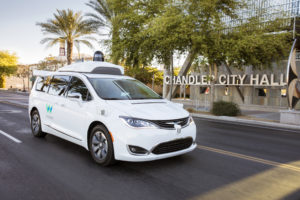
Waymo’s driverless vehicles were involved in significantly fewer reportable crashes than human drivers operating in the same areas, according to a new study from the Insurance Institute for Highway Safety.
The research compared crash data involving Waymo’s Level 4 autonomous vehicles with police-reported crashes involving human drivers in Arizona, California and Texas between 2021 and 2024. Researchers found that Waymo vehicles operating without a human driver had crash involvement rates that were 68 per cent lower than those of human drivers when measured per million miles travelled.
To ensure a fair comparison, researchers reviewed hundreds of crash reports involving autonomous vehicles and excluded many minor incidents that would likely never have been reported to police if they had involved conventional vehicles. They found that only about 22 per cent of reported autonomous-vehicle incidents met a threshold that would reasonably be considered police-reportable.
After accounting for those reporting differences, Waymo recorded 1.28 crashes per million vehicle miles travelled, compared with 4.06 crashes per million miles for human drivers in comparable operating areas.
Injury crashes were also less frequent. Waymo vehicles were involved in 0.28 injury crashes per million miles travelled, compared with 1.49 for human drivers.
Rear-end collisions showed some of the largest differences between autonomous and human driving performance.
Researchers found Waymo vehicles were 91 per cent less likely than human-driven vehicles to rear-end another vehicle. The company’s vehicles were also 40 per cent less likely to be rear-ended by another motorist.
The study found lower crash rates across several other collision types as well, including T-bone, angle, sideswipe and single-vehicle crashes.
Researchers also concluded that autonomous vehicles were rarely the primary cause of serious collisions. Among crashes judged to be police-reportable, Waymo vehicles were identified as the striking vehicle in about 14 per cent of cases and were considered the likely primary contributor in a similar share of crashes.
The analysis covered nearly 50 million miles of Waymo driverless operation and more than 220 billion miles travelled by human drivers in comparable urban areas. Waymo’s crash rates were lower than those of human drivers in Phoenix, San Francisco and Los Angeles. Austin was the only market where crash rates were comparable, although researchers noted the relatively small sample size.
The findings add to a growing body of research suggesting autonomous vehicles can outperform human drivers in certain urban driving environments. However, the authors cautioned against broad conclusions about all self-driving systems.
Waymo’s vehicles operate within tightly defined geographic areas and under specific conditions. During the study period, the company’s driverless vehicles did not operate on freeways or interstates, which were excluded from the analysis. Researchers also noted that nearly half of the Waymo vehicles involved in reportable crashes had no occupants at the time, reducing exposure to potential injuries.
The study arrives as autonomous vehicle deployments continue to expand across U.S. cities and as regulators, safety advocates and the public debate how best to measure the safety of self-driving technology.
Researchers said current reporting systems for autonomous vehicle crashes remain cumbersome and inconsistent. They called for improvements including standardized crash reporting, mandatory vehicle-mileage reporting and better data collection systems that would allow regulators and independent researchers to more quickly evaluate the safety performance of autonomous vehicles.
While the results suggest that Waymo’s current driverless technology is involved in fewer crashes than human drivers in comparable conditions, the authors emphasized that outperforming humans does not automatically make a system safe. Instead, they argue the findings should be viewed as one measure of how autonomous vehicle technology is performing as it continues to evolve.

Leave a Reply