




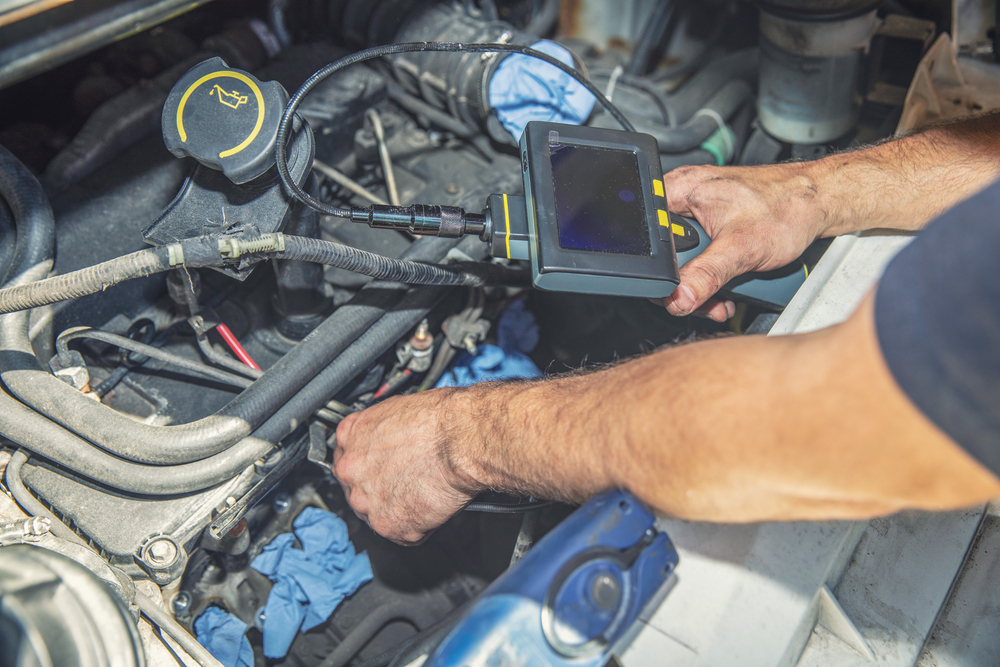
When customers walk into an auto repair shop, uncertainty often follows them like a shadow. On top of that, the stereotype of the nefarious mechanic has been around for decades.
But technology is changing how mechanics communicate with car owners, transforming the traditionally opaque world of automotive repairs, industry experts highlighted during a recent conference.
Digital vehicle inspections are emerging as a game-changer, providing transparency that helps build customer confidence, they said. As automotive technology continues to evolve, communication will be the key to keeping customers informed and confident in their repair choices.
“Whether you like the dealership or not, they provide a clear work order of things they saw on the vehicle,” says Eric Sponhaltz, director of sales at Autel Intelligent Technology.
Customers, he added, will often say things like, “I was provided a text with very clear pictures and some decent videos.”
The digital inspection process allows shops to show customers exactly what’s happening with their vehicle, even when they can’t be present. Bernard Tansey, co-founder and chief operating officer of Euro Clinic, believes this approach speaks volumes.
“Customers want to know everything,” Tansey explained. “Unlike other services where people don’t ask detailed questions, automotive customers are deeply curious about the work being done.”
These digital inspections typically include photographs, videos and detailed explanations of potential repairs, helping demystify complex automotive systems like advanced driver assistance systems (ADAS).
The technology comes at a critical time. Parts costs have risen dramatically, with service and repair prices increasing over the last few years. Transparent communication has become more important than ever, they advocated.
By providing clear, visual evidence of needed repairs, shops can help customers understand the value of their services and build lasting trust.
Sponhaltz suggests that these inspections go beyond just showing repair needs. “It’s important that customers understand what these sensors are and what they do,” he said, adding that this might include a visual walk-around of the vehicle, explaining where key safety systems are located.
The approach is particularly crucial as automotive technology becomes more complex. With nearly 50 per cent of vehicles now featuring ADAS technology, customers need more explanation than ever before.
Some shops are taking additional steps, using point-of-sale displays and waiting area information to subtly educate customers about automotive technologies. These strategies help demystify technical terms that can sound like alphabet soup to the average car owner.
“If you just hit somebody with a large bill and there’s no context to it, you’ll lose them,” Tansey noted. “But when you explain how a system works and why it’s important for safety, customers begin to understand.”
Image credit: Depositphotos.com
Related Posts








Comments
-
This ideology of consumers perception of the automotive industry only happens when the consumer does not trust the facility they are dealing with. I dont believe consumers care about the engineering of their vehicles, if they did they would google it themselves. Once a consumer finds a facility they can trust they only care about what is needed and how much. These DVI’s are a means to manipulate shops to implement and consumers to purchase more. The bottom line is a DVI is only as good as the technican performing it and cannot be done properly in a time according fashion. There is just too many cases of the consumer being left with false reassurance of their vehicles.

Leave a Reply