Ride Control is More About Control Than Ride
Share

View the latest digital editions of all of our publications or head straight to the archives

Share
When you think ride control, you think shocks and struts, right?
Most service providers who think about ride control generally fall into two categories. There is the “If the customer doesn’t complain about it, I’m not about to suggest it” group and the “If they aren’t bent, broken or leaking, they don’t need replacing” gang.
Canada’s ride control manufacturers are spending a lot of money and time showing the aftermarket just how wrong this attitude is.
Industry estimates say that 85% of vehicles in wrecking yards still have their original shocks and struts. That suggests that either shocks and struts are incredibly durable components, or consumers and service providers simply don’t know when to replace them.
Whether it takes place in a classroom, online, in the shop, at home, or on the track, education is the key to increasing awareness of this vast, untapped market.
“We think service providers are like paramedics; they react to situations. They need to be more like family physicians, looking after the complete wellbeing of the vehicle,” says Aaron Shaffer, marketing manager for KYB.
He goes on to explain that service providers are reacting to the vehicle owner’s complaints such as a soft ride or bouncy suspension.
“They are missing out on a lot of unperformed maintenance,” he added.
Dean Clarke, regional manager, Automotive and Canadian Heavy Duty, for Tenneco Automotive, makers of the Monroe brand of ride control components, puts it simply. “It has to be recommended. Technicians are reluctant to recommend add-on sales,” he says. If a vehicle comes in for a brake job, it usually leaves with just a brake job.
At ArvinMeritor Light Vehicle Aftermarket, makers of Gabriel shocks and struts, a study showed 55% of customers changed their shocks for improved comfort, while only 12% noted improved handling and safety as the reason they chose to replace their shocks.
This led Carlo Falcigno, Gabriel’s North American training manager, to wonder if these components shouldn’t be named safety enhancers, which he believes is a more accurate description.
Getting service providers to recommend ride control takes a lot of hard work and patience. It won’t happen overnight.
Back in the 1990s, Tenneco created the concept of the Safety Triangle to promote three leading benefits of shocks and struts: steering, stopping, and stability.
To successfully develop and present an educational program requires the cooperation of all levels of the aftermarket, from manufacturers down through the chain to distributors, jobbers and installers.
Manufacturers, salespeople, jobbers, and trainers polled were united. The potential market is huge, but ride control has to be understood and then recommended.
“We believe in profiling the right service dealers,” says Shaffer of KYB. “The vast majority of sales go through a small minority of shops. We use our distributors to help locate the best prospects.”
In Canada, KYB has gone an extra step in hiring Glen Hannan and Bill Charron as full-time training specialists.
It promotes its own “Ride Control Solutions” program through the aftermarket, working in partnership with jobbers and service providers the company feels can best use the tools and information provided.
The clinic portion of the program is designed for owners, service advisors and technicians; but the program encompasses more than this.
“We offer a very focused approach, trying to look at the behaviour of the installer,” Hannan says.
Training is less technical, Shaffer notes. “Shocks are not as sophisticated as air conditioning systems or electronics. We need to teach basic business skills, standards, procedures and facts,” he adds.
Follow-up is equally important. Jobber salespeople are expected to go back to a shop two weeks after the clinic, then again at six weeks and 14 weeks.
“We need the follow-up or the program won’t take hold,” Hannan says.
Tenneco takes training very seriously. It markets its Monroe brand through a variety of methods, including a dedicated sales force that spends a lot of time with installers.
“Training is part of our heritage, part of our success and part of our future,” emphasizes Doug Rockefeller, Tenneco’s director of sales for Canada.
“We can help service providers with technical expertise, but they have to be comfortable selling it,” he adds.
To this end, Tenneco has a unique Ride and Drive program aimed at getting installers to feel, hands-on, the difference between good and poor ride control.
The company takes its Ride and Drive program on the road throughout North America. Technicians are invited to a large open area such as a shopping centre parking lot, where pylons are arranged to set up a temporary road course.
Last year, the third-largest Ride and Drive Clinic in North America took place at Mohawk College in Hamilton, Ont. Mike Shanks, area sales manager, Niagara Region for Tenneco, organized the event.
“Technicians were grouped together in threes,” he explains. “One sat in the driver’s seat, one in the passenger seat, and the third sat in the rear, to fully experience the differences in ride control throughout a vehicle.”
Six vehicles were brought to the event, two Jeep Grand Cherokee, two Ford Focus and two Pontiac Grand Prix. Each vehicle had about 80,000 kilometres on the clock. First, installers drove a unit equipped with OE shocks around the pre-determined course, experiencing stopping, starting, turning etc.; in short, an everyday daily driving routine simulation. Next, they took the same drive again, in the same model of vehicle, with about the same number of kilometres, but equipped with brand new shocks or struts. (Just to make it fair, any changes made to one vehicle, e.g. new tires or new ball joints, were also done to the other vehicle.)
As you can imagine, the improvement was instantly noticeable.
Once installers can touch and feel the difference, they have the knowledge and the confidence to sell ride control replacement, Rockefeller says.
“We have to provide jobbers and installers with the tools to make selling comfortable,” Rockefeller adds. To that end, Tenneco salespeople travel with a demo kit which includes cutaway samples of the product to allow installers and distributors to touch and feel the products.
“We can offer technical expertise,” Dean Clarke says, “but we need to help the installer be comfortable selling the components.”
As ArvinMeritor’s Falcigno stresses in his clinics, it’s important that advisors and service providers understand the three Ss (steering, stopping, and stability), so that they can explain this to their customers.
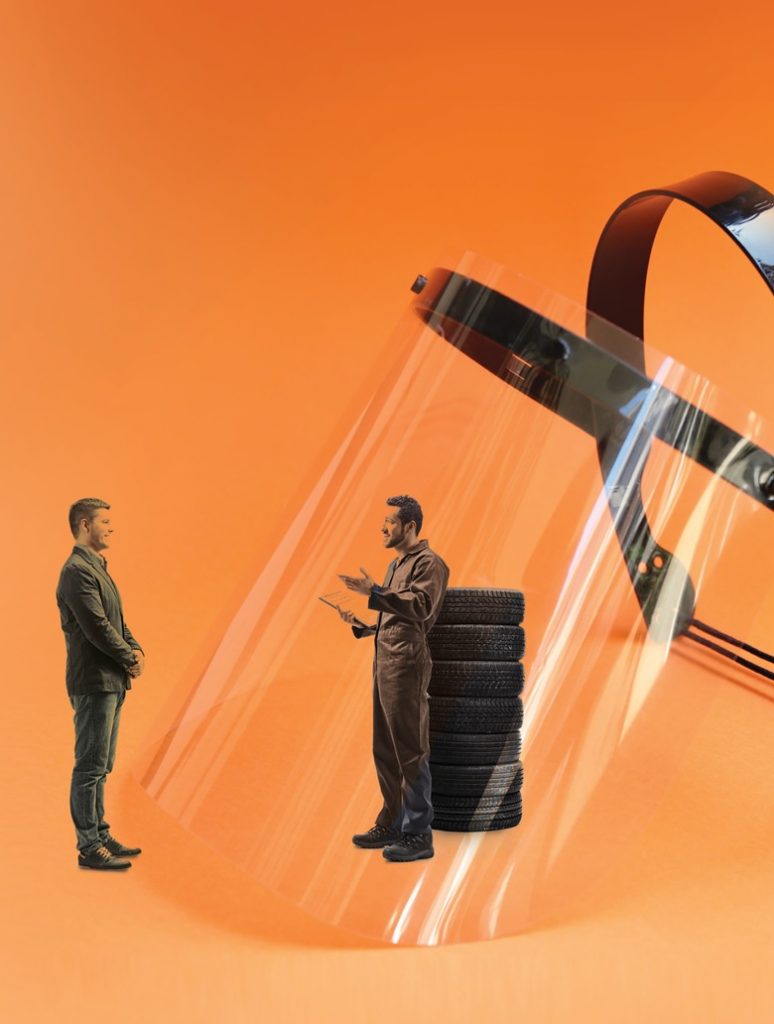
“We have to get service advisors and installers to spend an extra two minutes up front with the customer rather than an extra 20 minutes later.” The bottom line is that service providers have to get comfortable selling.
Most importantly though, all manufacturers agrees that training has to be ongoing. One way ArvinMeritor does this is through its Gabriel.com website. It features interactive, ongoing training.
“I tell customers in my clinics that training is like painting the Golden Gate Bridge: as soon as you get done you have to start all over again,” says Falcigno.




Leave a Reply