


Small changes in fuel systems having far reaching consequences for technicians
Share

View the latest digital editions of all of our publications or head straight to the archives

Share
As a general rule, the fuel system is not one that has seen a great deal of change in terms of its traditional mechanics for quite some time. However, leaving the argument at that, and not bothering to look a little closer, will only leave you hopelessly out of the loop when it comes to the finer points. As they say, the devil is in the details. That old saying certainly applies to the age-old fuel system, as wholesale changes have been few and far between, while small but significant tinkering has fundamentally altered the way most pumps operate. It is these more minor changes, along with the introduction and popularization of some new alternative fuels, which technicians and shop owners need to get up to speed on. With the unprecedented levels of integration and complexity seen in these systems, failing to replace a part correctly, or misdiagnosing an issue from the get-go, will almost certainly lead to annoyed suppliers handling unnecessary comebacks, and angry customers who are now back in your waiting area.
Small Changes to Begin With
Manufacturers have always scraped around for ways to please their OE patrons by keeping costs low in order to ensure those coveted off-the-line fitments. As a result, some components traditionally found as part of a fuel pump assembly are beginning to disappear. One such item is the fuel filter itself. Long considered one of the cheapest and easiest fixes in the garage, the obsolescence of the filter has farther reaching consequences for the technician than might be initially assumed. Seeing as vehicles will likely only use the pre-pump strainer as the system’s sole filter, what used to be a quick and easy fix will now involve the more complicated and expensive dropping of the gas tank to replace that strainer, something your customers will likely not grasp initially.
“Shop owners will really have to be the educator,” says Tom Fritsche, director of product management for Beck/Arnley. “What used to be a $15 job for a filter and a DIY replacement, now takes much more time in the bay, and is then a much more expensive process.”
What’s more, as vehicle components become more complex and the number of fuel-injected vehicles on the road increases, the aftermarket will have to remain technically vigilant in order to diagnose fuel system failures more accurately than it has in the past. Particularly with the looming lack of the fuel filter to blame, technicians must be reminded to carry through with a full diagnostic plan, as opposed to assuming a fuel pump failure. As research from Frost and Sullivan points out, “Improper diagnosis of a vehicle’s problem by technicians may also lead to the replacement of a fuel pump and fuel injector, especially when the problem may have occurred as a result of failure of some other related part. The complexity of the fuel delivery system components makes room for misdiagnosis, leading to the inadvertent replacement.”
In fact, manufacturers have noticed such a spike in fuel pump returns — pumps they claim are in perfect working order but misdiagnosed as having a problem. As Phil Yaccarino, fuel systems manager for General Motors comments, “It’s very straight forward to change out a fuel pump, whereas other components in the system can be very complicated. In the future, hopefully OBD systems will be able to better point technicians in the right direction.”
Ethanol and the Fuel System
As we’ve all been made painfully aware, automakers are ramping up their various environmentally-minded product offerings in a race to not only meet tough new global initiatives, but also to gain the purchase dollars of a growing eco-conscious public. However, the addition of alternatives such as E85 and other bio-fuels into the everyday family sedan has not come without its bumps in the proverbial road. Any new system is going to have some growing pains, and the introduction of increasing amounts of ethanol into the fuel mix is certainly no exception.
Many industry professionals suggest that some of these glitches are largely attributable to the overall newness of the process, and little to do with the hard parts.
“As with the original versions of gasohol or E10, you see some cleanliness issues with some of the fuels being produced,” says Yaccarino. “Getting a good quality pump is not really the issue, as most of the time it’s a problem with the bio-fuel itself. Right now, there are many more variables in comparison to standard fossil fuels, and sometimes they are just not as stable. But over time, manufacturers graduate and do the house keeping, and there is no reason to suspect anything different with this new formulation.”
While Yaccarino’s approach may seem a little bit “wait and see,” Canadian service providers can certainly take solace in the fact that while more E85 capable vehicles are rolling into the country, finding someplace to actually put the new fuels into those vehicles is another issue altogether. Suffice to say technicians and owners have some time to do their homework on the matter, but probably not as long as one might like. As will be noted here, the dangers of not understanding the fundamental differences in approach and execution can be dire.
Corrosiveness of Ethanol brings changes to fuels system design
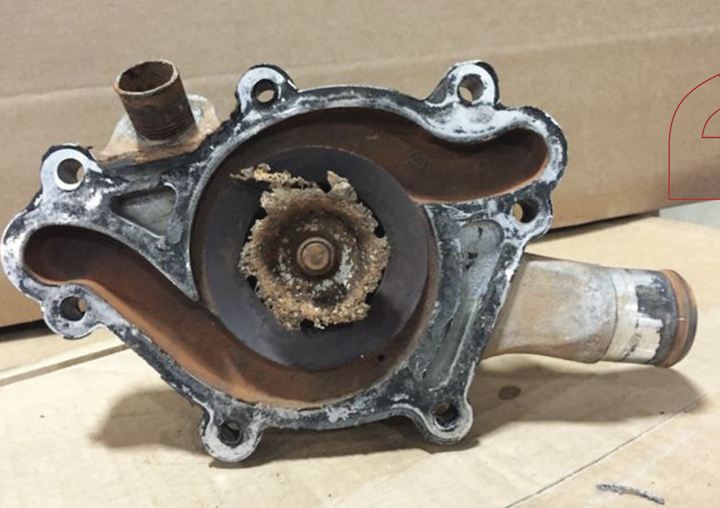
As a rule, ethanol is a fundamentally corrosive product, but what’s more, it has a tendency to attract other corrosive materials to it, due to its alcohol content. Service writers especially need to ask the owners of E85-ready vehicles about their uptake of the new fuel, as it can dramatically affect the sorts of replacement parts ordered. Due to the extra corrosive properties of ethanol, manufacturers have been forced to make some significant changes to the manufacturing of their fuel systems.
“We’ve had to upgrade the metallic coatings, and so that’s probably the biggest change,” says Yaccarino.
Other companies are also looking into their procedures to ensure E85 suitability.
“We’ve had to ask all of our manufacturers with rubber products like fuel system gaskets what tests have been done to ensure compatibility,” says Fritsche.
It is those rubber gaskets in particular that manufacturers are citing as an increasingly important maintenance/inspection opportunity. As ethanol becomes more integrated into the overall fuel system, it may very well be the gaskets and other rubber components that take a beating, due to the increased corrosiveness of the fuel. Ensuring that a replacement part has been properly tested and certified for use with an ethanol enriched fuel will be the key to keeping a happy customer. By grilling your jobber on issues like gasket formulations and coatings, and by making sure the parts the jobber is sending you are properly sourced to meet those strict requirements, you’ll get the answers you need to make sure the part being bolted onto your client’s vehicle is going to stand-up to the corrosiveness of the new fuels.
As Fritsche put it, “I can source a part from anywhere, put it in a box, sell it, and have a technician put it on the car.” Fritsche notes several levels of responsibility, starting with his own company, and ending with the shop owner. “It’s my responsibility to provide the proper parts, but this is also an educational issue. But it is the responsibility of the shop owner to insist on ordering and installing the right part.”
He went on to mention that if there is a failure anywhere down that chain, the industry as a whole ends up with a customer on the side of the road.
E85 Burns Cleaner, But Has Less Kick
What some clients fail to realize, and what technicians must be aware of, is that some bio-fuels like E85 are cleaner burning, but less efficient than standard gasoline. Given that ethanol, and as a result E85, produces less power than conventional gasoline, manufacturers have also had to make adjustments to avoid customers complaining about a noticeable decline in output.
“You get less power with E85, and so the e
ngine will have to increase flow rates to compensate,” says Yaccarino.
In the case of General Motors, that has meant a move to larger fuel pumps in some applications in order to draw more fuel through the system in order to make up for the inefficiencies of the ethanol. This results in as much as a 20 per cent increase in the amount of fuel found in the engine at any given time. This becomes an issue for service providers. If an E85 equipped vehicle shows up in your bay, be sure to replace any faulty fuel system part with one that is equipped to perform up to the flow rate levels demanded by E85 engines. Failing to do so will almost certainly result in a customer whose car is not performing up to snuff; or worse, is driving a car in which the fuel is eating away at the internal fuel components.
In the end, the primary issue is education, and when it comes to ethanol, it’s not simply a mechanical problem.
“It used to be that we could just be a mechanical engineer or an electrical engineer, but now we have to be chemical engineers too,” notes ?Fritsche.
With fuel systems not likely to return to the basic mechanics of yesteryear, shop owners would be well advised to get on the training bandwagon before they have to send an E85 vehicle to the dealership.






Leave a Reply