

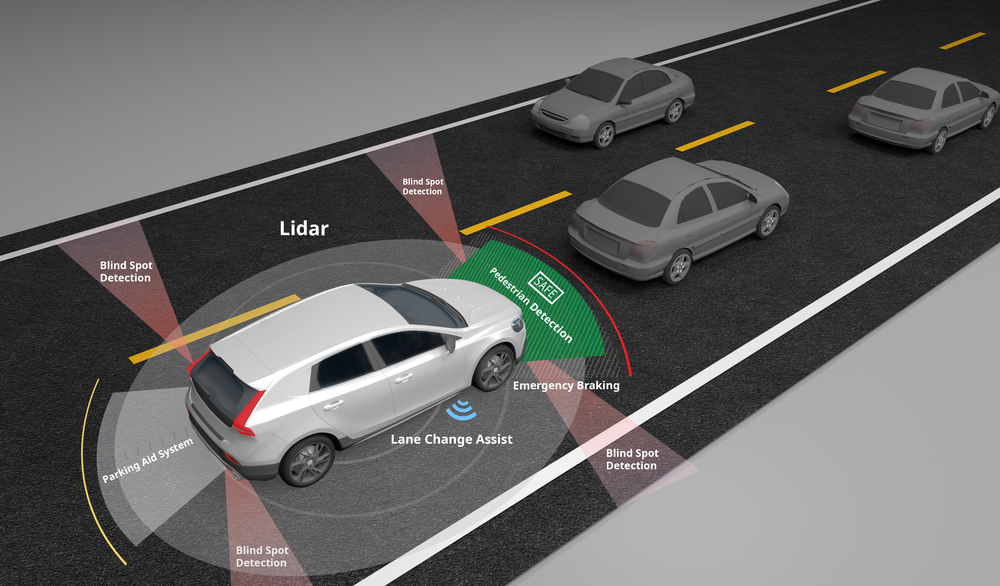
The automotive repair industry is racing to keep up with rapidly advancing safety technologies, as advanced driver assistance systems (ADAS) become standard on nearly all new vehicles.
As more features are being added to new vehicles every year, automotive repair shops are being pushed to make critical investment decisions about new calibration equipment that can cost tens of thousands of dollars.
“There’s no more profitable business today than diagnostics, alignment and data calibration,” said Eric Sponhaltz, director of sales at Autel Intelligent Technology. “Alignment has traditionally been a loss leader, but ADAS services can change that.”
Bernard Tansey, co-founder of Euro Clinic, recommended a strategic approach to investment during the panel discussion at Auto Care Connect in Phoenix this year.
“Look at how many calibrations you could potentially do,” he advised. “If you’re set up to do two calibrations per week, that might justify purchasing expensive equipment.”
The technological landscape is changing rapidly. ADAS adoption has skyrocketed from just 4 per cent in 2015 to 95 per cent in 2023. These systems include automatic emergency braking, lane departure warnings and adaptive cruise control.
Consumer awareness remains a significant challenge. A recent survey showed that while many drivers are aware of cruise control, understanding of more complex systems remains low.
“I don’t think a lot of customers know what these systems are,” Sponhaltz noted.
“These sensors aren’t ‘smart’ in the way people might think,” he explained further. “They sit in a fixed position, making assumptions about the vehicle’s position and movement. They don’t have the ability to look left or right, up or down.”
Technological advancements are making calibration faster and more accurate. “Back years ago, people stood with string and tape and mirrors everywhere, and they were in our shop for eight hours trying to calibrate this stuff,” Tansey says. “Now we’re seeing it happen in minutes.”
The legislative landscape is also evolving. Lance Powell from The Pronto Network emphasized the importance of protecting consumer choice.
“We need to make sure we’re pushing for the right to repair, allowing consumers to choose where they want these systems calibrated, not just at dealerships,” he said.
“These are safety pieces on your car,” Sponhaltz added. “We need to keep it simple and help customers understand what they do.”
It comes down to transparency and educating the customer.
“If you let them know what the system incorporates, how it acts and why it’s so important, the customer feels like, ‘OK, now I see why I’m spending this amount of money,’” Tansey said.
Image credit: Depositphotos.com







Leave a Reply