



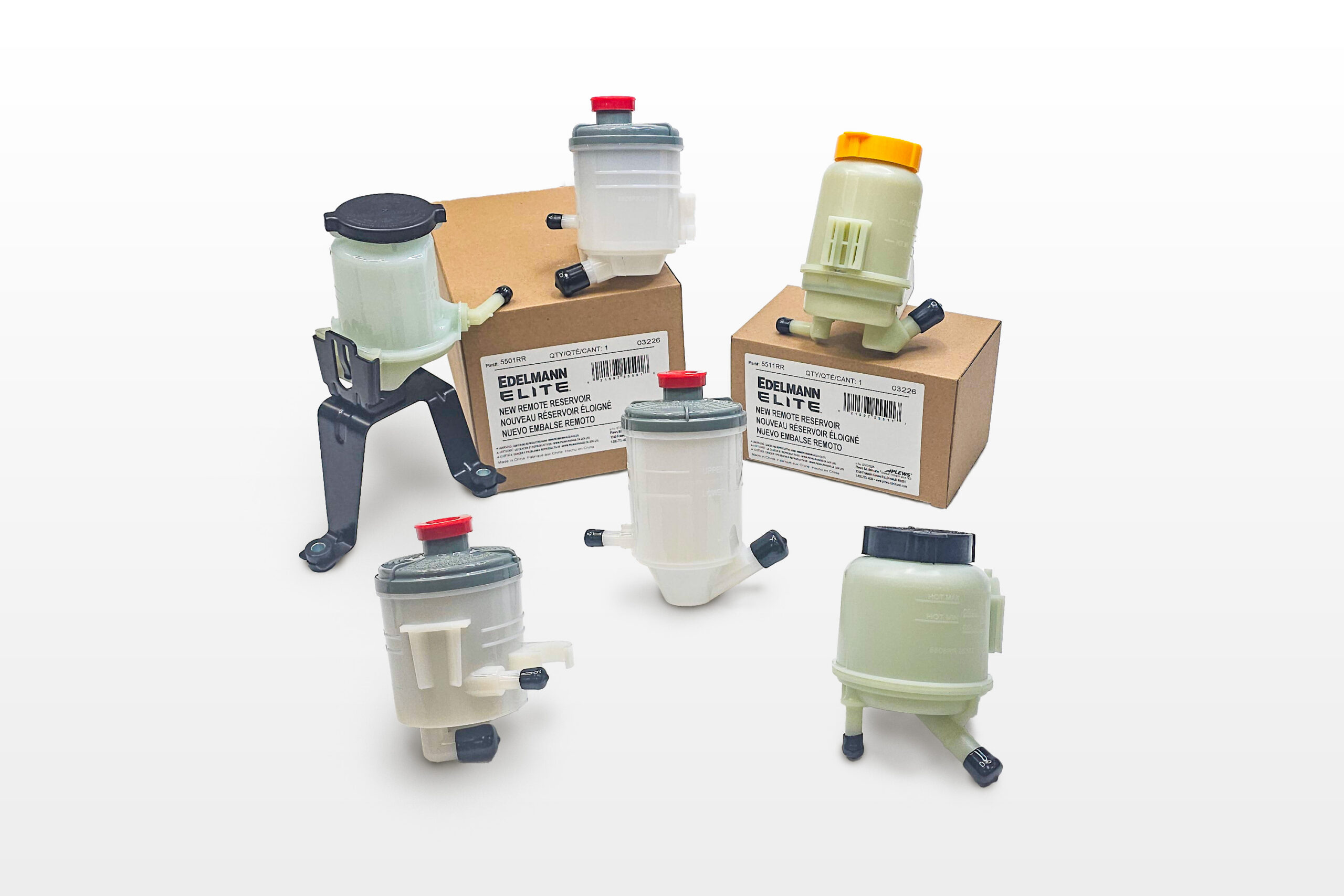
Plews & Edelmann has introduced Edelmann Elite remote reservoirs, a new line of replacement power steering reservoirs designed to improve fluid quality and help protect power steering pumps from premature failure.
Remote reservoirs serve as the fluid source for power steering pumps, storing fluid, allowing air to separate from returning fluid, and filtering contaminants before they reach the pump. Over time, internal screens can become clogged and housings can deteriorate, leading to aerated fluid, inconsistent steering assist, pump noise, and premature component wear. These issues are often mistaken for pump failures.
“The reservoir is the easiest part on a power steering job to overlook,” said Anthony Holguin, director of category management at Plews & Edelmann. “It looks like a simple tank, so it often gets carried over while the pump, hoses, and rack are all replaced. But that carried-over reservoir is still holding contaminated fluid and a clogged screen, and it goes right to work shortening the life of the new pump. By offering an Elite reservoir with new filtration and a housing that survives the heat, we give the pump clean fluid from the first mile.”
The new Edelmann Elite remote reservoirs are all-new, application-specific replacements featuring integrated filtration, durable sealed housings, and OE-style mounting and port configurations for straightforward installation. Designed to deliver clean fluid and reliable performance, the reservoirs help support the longevity of related steering components and reduce the risk of repeat repairs.
Coverage includes select Acura, Honda, Infiniti, Lexus, Subaru, and Toyota applications, representing approximately 9.3 million vehicles in operation.






Leave a Reply