

New leadership, familiar values: Fountain Tire’s Jason Herle prepares to chair AIA Canada with plenty of issues on the industry’s plate
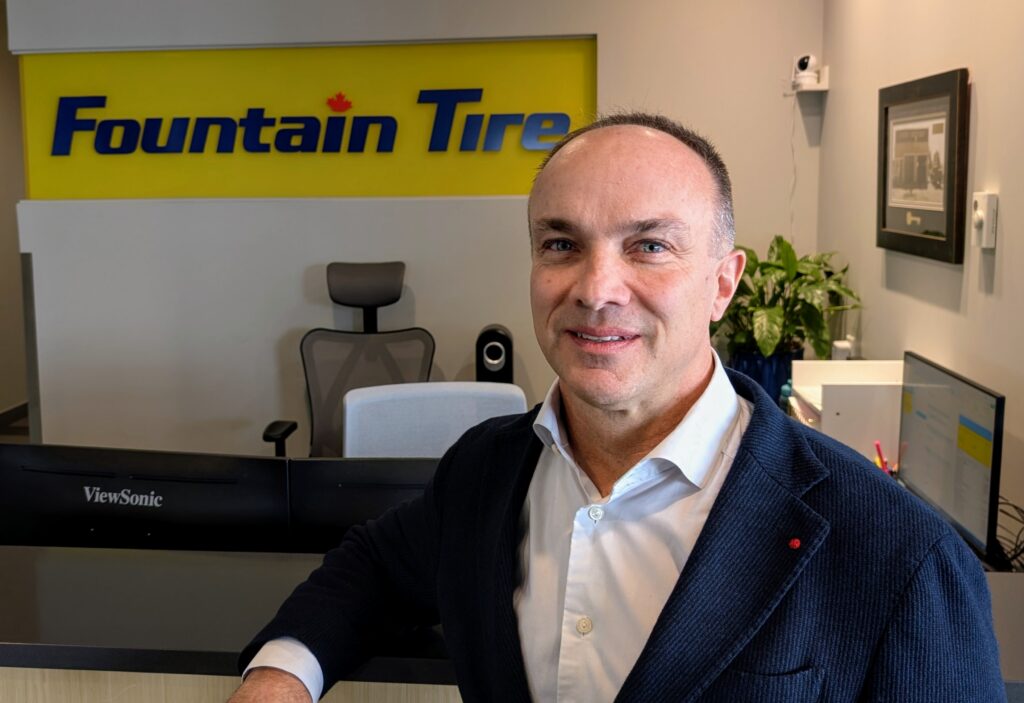
The way Jason Herle tells it, his path to the Automotive Industries Association of Canada started in a small Alberta town, in a place that looks a lot like the businesses he represents today.
He grew up in Provost, Alberta, a rural community where hard work was visible and practical. There was a Fountain Tire in town; his father would take the family vehicle there for service. At the time, it was just another stop on a busy family day. But looking back, he sees it as an early hint of what was to come.
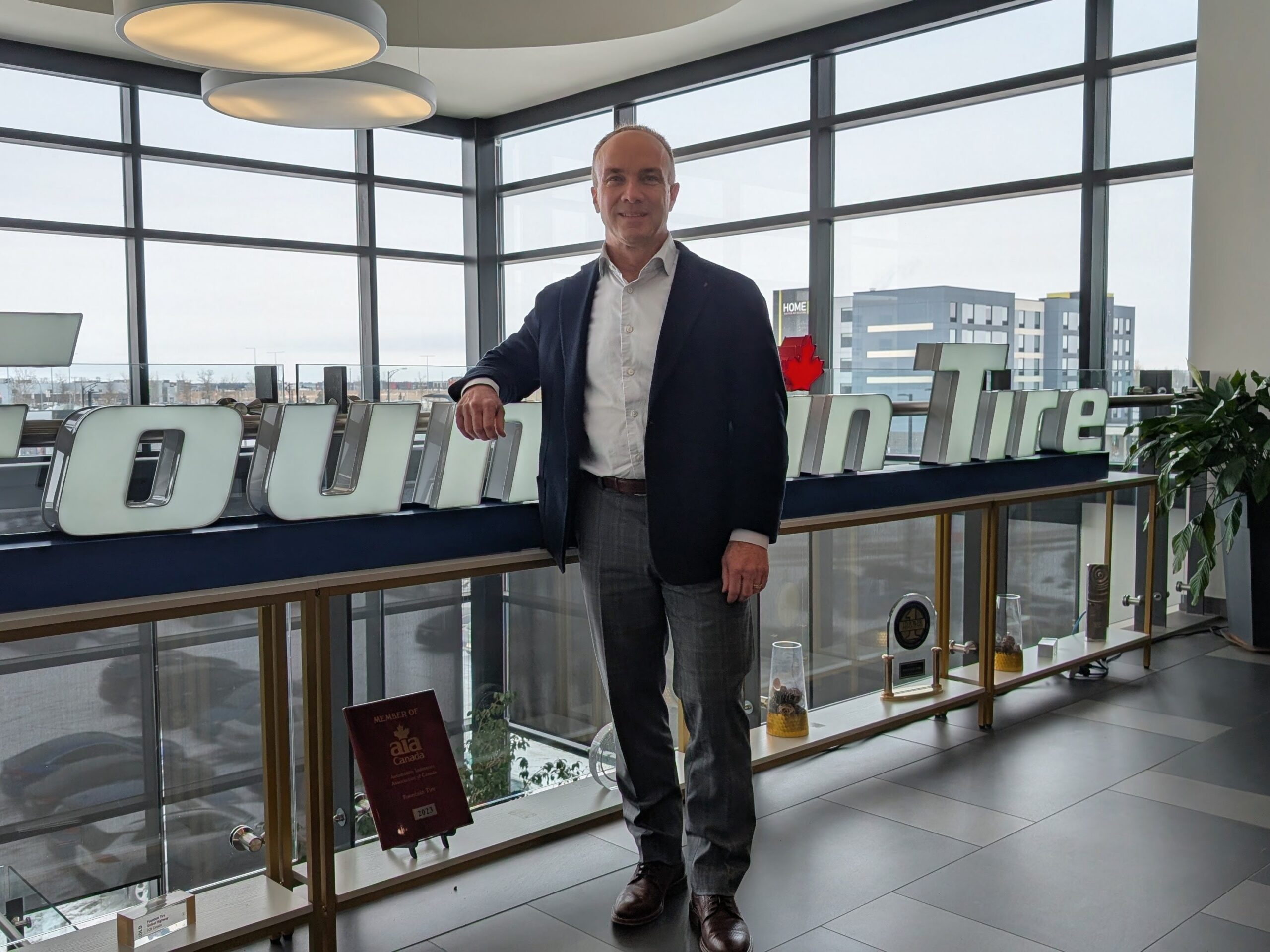
Today, Herle is chief executive officer of Fountain Tire and the incoming chair of AIA Canada, the national association representing the country’s automotive aftermarket. The industry generates about $44 billion in economic activity and employs about 500,000 people to take care of the more than 26 million vehicles on the road today.
Herle’s new role comes at a time of change for AIA Canada and the sector. A new association president, a shifting political landscape and an industry wrestling with technology, labour and rising costs are all part of the picture.
Through it all, Herle keeps coming back to basic ideas he learned early on: Hard work pays off — the effort you put into something will yield great results.
He likes that the core of this business is tangible. It is not, as he puts it, based on something you can’t see or touch, like artificial intelligence or digital currency.
“It involves hard work. There’s engines, there’s moving parts,” Herle said in an interview with Jobber News. “And that’s probably part of what maybe even brings me back to my rural and farm environment. It reminds me of: You get out of something what you put into it. Our industry is a lot like that.”
In his view, the same thinking applies to the work of an industry association. Members will get back what they put in.
Path to the C-suite
After leaving Provost, Herle moved to Edmonton. He earned a commerce degree and then his chartered accountant designation.
Directly from there, he joined Fountain Tire. The year was 1994. At that time, Fountain Tire had 56 stores. Revenue was about one-tenth of what it is today.
He didn’t start in a corner office. When he arrived, the company didn’t even have a computer system. One of his first major projects was helping to launch that initial system across the business. The work took him into the field and into stores, where he saw the network up close.
From there, his roles expanded. He moved into operations. Herle did a stint in British Columbia. He came back to Alberta and headed up real estate and expansion, which took him across the country, working with dealers and the company’s own stores. Wholesale and distribution followed, then marketing.
The progression eventually led to the chief operating officer role. He has been CEO since 2022.
He describes the industry as large, but not in a way that feels distant. Relationships matter. The company’s partners, suppliers and even many competitors are part of a network he values. The work has taken him to many parts of the world that he figures he would not have seen otherwise.
“The people in the industry are great. It’s a big industry, but [at the same time] it’s not,” he observed. “I really have enjoyed the relationships, our company, our suppliers and even, for the most part, competitors. It’s been good to me.”
There is also a simpler test: You need to enjoy what you’re doing.
“Above all of those, if you don’t have fun doing what you’re doing, I don’t think any industry will keep you in it,” Herle said. “And I’ve had a lot of fun during my 31 years.”
“[AIA Canada], to me, is a premier organization. It’s the crème de la crème of organizations in the automotive aftermarket.”
Finding his place in AIA Canada
Herle didn’t start his career knowing much about AIA Canada. That changed around a decade ago, when the association approached his predecessor as CEO, Brent Hesje, to join the board. He later became chair of the AIA Canada board in 2018.
So when the chance came for Herle himself to join the board, he decided to continue the journey.
He described his motivation in terms of both giving and receiving.
“I thought I was at a point — and Fountain Tire’s at a point — where we can give back to the industry a little bit,” Herle said. “I’m at the part of my career where I can and want to make time for this. I believe the perspective of being a CEO that has worked with a board, and more specifically with the chair of a board, it puts me in a great position to add value to both our new CEO, Emily Chung, and the AIA Canada organization.”
When it comes to organizations, Herle doesn’t see one better than this association.
“[AIA Canada], to me, is a premier organization. It’s the crème de la crème of organizations in the automotive aftermarket,” he added, noting it’s an opportunity to put his new accredited training to use, the ICD.D designation from the Institute of Corporate Directors. “We’ve been very selective of the organizations we belong in. We’ve removed ourselves from some, added to others, but [AIA Canada], if you want to put all your efforts into one, I think this was the one to do.”
In his view, AIA Canada can still do things better and more efficiently than individual companies, like Fountain Tire, can. Advocacy is his most obvious example. Right to repair sits at the top of that list where it takes the collective effort of the industry through its national association to speak with governments and other decision-makers.
The breadth of the aftermarket
When Herle joined the AIA Canada board, one of his first surprises was the scale and diversity of the industry.
He pointed to the size of the aftermarket and the millions of vehicles on the road. More important for him, though, was realizing how central the collision sector is to AIA Canada and its membership.
“The biggest thing I learned was the importance of the collision sector,” Herle said.
Given that breadth, Herle said there may be opportunities for AIA Canada to play a bigger role in that space. At the same time, he is careful not to put everyone under the same label.
“You have the collision sector, you have the mechanical sector, and technically the glass sector, if you want to represent the total automotive sector,” he pointed out. “So trying to appeal to all members, it’s a bit tricky.”
He credited Chung with recognizing that gap and trying to bridge it since she moved into the position at the start of the year.
More focus and time on the collision sector will help, Herle noted. The challenge is doing that while still making sure the association adds value across a broad membership base.
That base includes national and regional chains as well as independent businesses. Herle has seen, notably in his own company, how hard it can be to get messages from head office into each location. If AIA Canada tries to work directly with the independent members as well, impact can be hard to achieve.
That problem has led him to think about how associations are structured. He sees potential for more collaboration among industry groups and pooling together resources to achieve what’s best for the aftermarket.
“We’re fighting battles against OEMs, and their pockets are so much deeper than ours,” Herle pointed out. “So I think it’s going to take a collective effort, whether it be on the collision side or the mechanical side.”
A new era
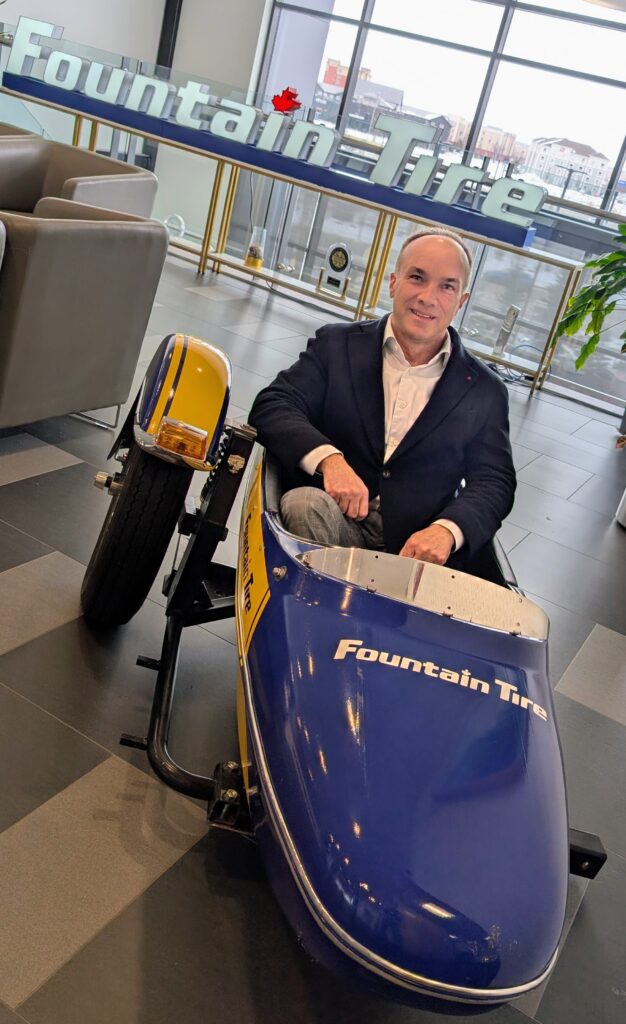
Herle takes over as chair at a moment of leadership change at AIA Canada. J.F. Champagne, who led the association for more than a decade, has been replaced by Chung. Herle credited Champagne with adding a lot of benefit and value during that time.
Chung represents a different type of leader in that she comes from the garage floor. She is from the industry as a certified technician and owned her own repair shop for 16 years.
Herle sees that as both an opportunity and a responsibility.
New leadership always brings a chance to step back and ask whether the association should recalibrate, refocus or continue along the same path, he noted. It is the same question he faced when he became CEO at Fountain Tire. People wanted to know what he would do differently. If things are going well, he said, you are not about to change everything overnight. At the same time, there is always room to improve.
“New leadership provides new opportunities,” Herle said.
He thinks both the board and Chung see opportunities to make changes that will strengthen the association, particularly around member engagement and value.
“The [AIA Canada] board has a lot of CEOs, people who make decisions every day. They’re more Type A personalities [who] want to get things done,” Herle explained. “So I think I have a role to play between the board members and the CEO. Kind of that buffer role to make sure we’re not trying to roughshod over what Emily’s trying to accomplish and change actions and decisions on a daily, daily basis.
“We have to give her room, support her [through] strategy oversight and then make sure we’re following the strategy that we have set.”
Chung has already started outreach to members. For Herle, that emphasis on listening is important. If the association does not provide value to its members, he noted, then it has to ask what good it is.
“How we improve membership engagement, value propositions for the membership, I think that is something I want to make sure as the new chair of the board that we do,” Herle said.
“We’re fighting battles against OEMs, and their pockets are so much deeper than ours. So I think it’s going to take a collective effort, whether it be on the collision side or the mechanical side.”
Advocacy and right to repair
Advocacy remains one of AIA Canada’s core missions and a key reason many companies join the association. Herle has seen how long and uncertain that work can be.
He has taken part in Hill Days in Ottawa, where AIA Canada leaders meet with elected officials and senators to push for progress on key challenges facing the industry, including right to repair.
“All you have to do is watch the news. A lot of political uncertainty. The world’s changing. We’ve gone from being a world that’s global to one that’s nationalistic,” Herle explained. “So we have to be able to adapt to those changes. And I think everyone’s really focused on keeping costs down right now.”
Advocacy takes time and comes with no guarantees, he pointed out. He sees that as part of why a national association matters. The knowledge and experience built up in AIA Canada staff can be hard for individual companies to match.
Right to repair, in his view, is one of the most important files on the association’s agenda.
He referenced the association’s recent report in conjunction with business advisory firm MNP that outlined cost savings from the automotive aftermarket for Canadians, including savings tied to collision work. He says limiting access to data could hurt that.
“If we don’t have an affordable means to access OEM data, that’s going to be very detrimental to the automotive aftermarket, and not only on the cost side,” Herle noted. “If you don’t have access to that data, your revenue streams are going to dry up.”
Change, education and member value
Herle does not claim that AIA Canada can predict the future. In his view, the association’s strength lies more in how it responds to change and helps members interpret what is coming at them.
The only constant is change, but he noted that the pace of change is faster now.
“The change I’m talking about is coming faster, and it’s coming with technology,” Herle said. “It’s evolving rapidly. How many times do you turn on the news and not hear something about AI?”
Most members, whether they are part of a chain or running a single shop, are focused on their daily business. They may not have time to sort through which trends matter and which do not.
“They’re into their business at an everyday level. But if we can help decipher and interpret some of the noise out there, help our members focus on the right things with re‑education, training, lobbying the government, I think that’s a role [AIA Canada] can play,” Herle said.
He came back to the question of value. AIA Canada has, in his words, not always been perfect at getting its value proposition right or fully engaging members. He thinks that is something the association needs to keep working on. He believes Chung’s empathy for members, shaped by her time in the industry, will help.
In his view, AIA Canada also has an advantage in its national scope. That brings responsibility. But that doesn’t mean the association can rest on that position. It has to prove its relevance by engaging members and adding value in ways they can’t achieve on their own.
“We’re not going to be everything to everyone, but if people look at the broad picture, I think it’d be hard not to justify being involved in AIA Canada to some extent.”
This article originally appeared in the March 2026 issue of Jobber News.


Leave a Reply