

From the Magazine: The warehouse under pressure
Share

View the latest digital editions of all of our publications or head straight to the archives

Share
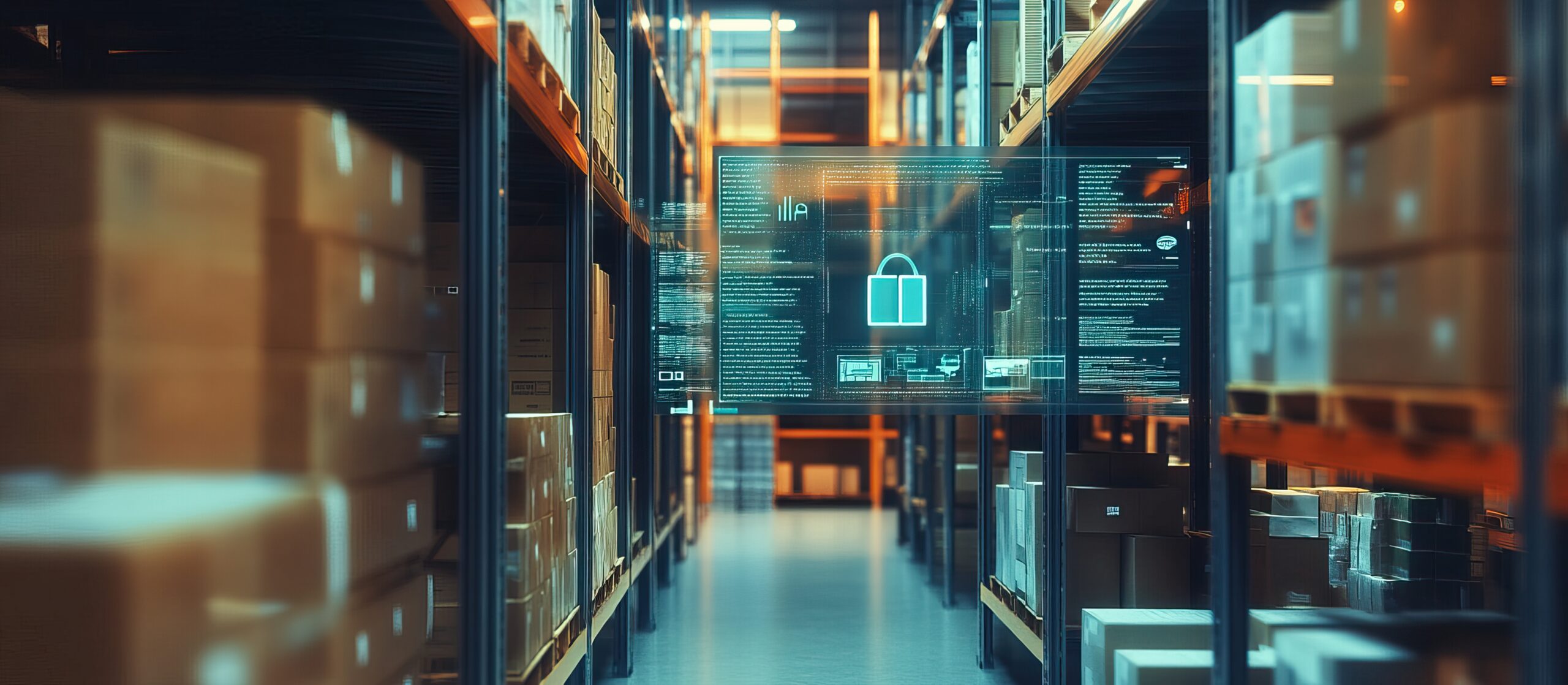
In a world becoming more complex with continued advancements in technology and artificial intelligence, warehouse environments must remain vigilant when it comes to security and across every dimension of their operations.
As cybersecurity and cargo theft threats become increasingly sophisticated, disruptions become more prevalent, automation markets weather turbulence and commercial real estate transitions away from pandemic-era volatility, the warehouse industry finds itself at a crossroads. Though the challenges are significant, so is the progress building around solutions.
Many experts agree that the central challenge when it comes to security is not simply that more threats exist, but rather that there is a lack of unified, real-time visibility across warehouse operations.
Adam Lowenstein, product director with i-PRO Americas, which provides security camera systems to warehouses and distribution centres, says many warehouses today struggle to maintain awareness across multiple zones without constant human monitoring.
“The bigger issue is visibility,” said Lowenstein. “Large logistics environments need a clear, real-time understanding of what is happening across loading bays, yards, entry points and high-value areas without relying on someone to watch screens all day.”
Lowenstein says technology is evolving, with AI-enabled cameras able to detect people, vehicles and custom objects. “Warehouses and distribution centres can identify real events, such as intrusion or loitering, while filtering out noise from weather, lighting changes or irrelevant motion,” he said. “The result is fewer false alarms and faster, more focused response.”
Zebedeo Pena, strategic account manager at security solutions provider Genetec, agrees, saying warehouse operators lack resources to monitor all areas in real time, resulting in investigations having to reconstruct what happened.
“Technology is helping by connecting different types of data so teams can answer those questions faster. Video, access control, intrusion detection, ALPR, analytics and sensors such as LiDAR can help reconstruct events and show how people, vehicles and goods moved through the facility,” said Pena. “For many operators, the priority is not watching everything live, it’s being able to quickly investigate issues, understand where a process broke down and keep operations moving.”
Charlie Forsyth, director of enterprise resilience solutions at Motorola Solutions, says with security systems often generating too much disconnected data, there is a need to move from passive monitoring to active response. “The big trend is to move beyond detection and automate a coordinated, local response to intervene, preventing incidents before they occur and limiting their impact,” he said.
AI is also helping shift security from monitoring to detection and action, turning massive data streams into actionable alerts and faster decision-making. Security systems are increasingly converging into operational intelligence tools, revealing breakdowns in logistics flows and providing yard and inventory tracking.
“This helps reduce manual yard checks, speeds up investigations, supports after-hours access and improves truck flow,” said Pena.
Worker safety is another benefit of warehouse security infrastructure.
“Through AI-enabled technologies with advanced video analytics, security operators or managers can spot potential hazards such as a floor spill before they escalate into serious accidents,” said Forsyth. “Smart sensors can alert to signs of distress like key words such as ‘help’ or ‘emergency’ and automatically alert security teams, helping to create an environment where worker safety and asset protection go hand in hand.”
Security threats, however, are not limited to what happens on the warehouse floor.
“Cybersecurity is no longer viewed as solely an IT problem. Organizations are recognizing that it is an organizational risk,” said Becky Ross, vice-president of IT for DHL Supply Chain.
During a panel discussion at the Gartner Supply Chain Symposium/Xpo in Orlando this past May, Ross went on to say that the recognition is not focused solely on one’s own organization, but on anyone with a digital touchpoint.
“Does anybody remember when cybersecurity training used to be, ‘If you get an email that obviously looks like phishing, don’t click the link?’ That’s what we used to train on,” she said. “Now, these threat actors are so sophisticated. They have resources, there are large numbers of them and they’re coming at us from every angle. We need to make sure we have the right practices in place to help protect against that.”
Joining Ross on the panel was Jennifer Miller, vice-president of transportation for DHL Supply Chain. On the operational side, Miller says there are a tremendous number of bad actors who attack every part of her company’s IT and operational processes.
“They’re attacking MC [motor carrier] numbers. They’re buying legitimate MC numbers, rebranding them and then using those legitimate identities to steal freight,” she said. “They’re hitting us with emails and every type of scheme imaginable to find a crack in our process or infrastructure. It’s incredibly important that we address every piece of it.”
Miller adds that the threat does not stop at her company.
“These bad actors will infiltrate one of our partners’ or carriers’ email systems, and they’ll wait. They’ll watch until they get the information they want, and then they’ll physically attack and steal,” she said. “That means our protocols have to be spot on every single time. This is no longer a full-frontal assault. It’s behind the scenes, it’s subtle and we have to constantly watch for it.”
To help build resilience across transportation partners, IT and operations, Miller compared the effort to a warehouse’s “safety first” approach.
“It’s the same thing in transportation and virtual operations. It has to be ‘security first,’” she said. “The only way to scale is by building a culture inside the organization where people understand they must follow the process every single time without fail. Culture is everything.”
Ross agreed, adding that cybersecurity is not a “me” or “you” problem but a “we” problem.
“The weakest link can cause the breach, so we have to work together to create resilience at scale,” said Ross. “That starts with common standards across corporations and digital partners. We also need real-time visibility — not just dashboards, but systems actively monitoring what’s happening now.”
The pressure facing warehouse operators extends well beyond security. Disruption in warehouses used to be more isolated events that were easier to predict and mitigate. Today, these challenges are becoming more frequent, complex and difficult to plan for or resolve.
Luther Webb is the vice-president of data science at Trew, a material handling automation solutions company. With more than 40 years of experience in warehouse operations, he remembers a time when disruptions such as weather and geopolitical events were easy to predict, and companies knew how they would respond.
“In the present day, those uncertainties have become more frequent. They have become more unmeasurable, less predictable and more complex,” he said during a presentation at the Council of Supply Chain Management Professionals Edge conference in Maryland. “In the future, these are not going to go away. What’s going to happen is, instead of being linear, these disruptions, these problems that are going to affect our warehouses, will come in a more compound manner. They’re going to start stacking up on top of each other.”
To help overcome these compounding challenges, Webb said warehouse operations need to become more resilient.
“Adaptability just doesn’t happen. It has to be something that you plan for. It has to be strategic,” he said. “You have to have a playbook that you can go to, that operators are going to go to, so that they know how to react when certain things happen.”
Webb also pointed to labour dependency, particularly how it can create variation and vulnerability within a warehouse operation.
“Wherever we can absorb labour and reduce our dependency on labour, that again will give us some catalyst for resilience. Labour fragility is not going to go away. Our labour is going to continue to be a problem, and we’re going to have to continue to invest in those solutions that will reduce our labour dependency.”
Autonomous robotics is another area that should be evaluated to ensure flexibility during periods of disruption. Goods-to-person systems address three key mechanisms: Labour reduction, built-in recovery capacity through excess throughput capability and strategic SKU distribution.
“You have to make sure that if an aisle goes down — we’ll say in an ASRS solution — how do I get around that? Are the SKUs spread out in that ASRS system where I can continue to complete my orders while I’m trying to get that aisle back up?” said Webb.
Ultimately, customer expectations remain the constant that never changes.
“Customers will never want a more expensive product. Customers will never want their orders to take longer. They always want the orders to be there quicker, sooner, cheaper,” said Webb. “Those are things that are true. Those are the things that we need to do when we evaluate our warehouse for resilience.”
The investments required to build that kind of resilience are coming at a time when the global warehouse automation market is itself emerging from a difficult period.
The market endured a volatile 2025 marked by economic uncertainty, geopolitical tensions and industry shakeups, but is expected to see more balanced growth in 2026, according to a report from Interact Analysis. Some automation vendors struggled financially, while others restructured operations. Despite those challenges, warehouse automation order intake exceeded expectations, driven largely by major investments from large retailers such as Amazon, Tesco and Marks & Spencer.
Rueben Scriven, research manager at Interact Analysis, said several factors fuelled order growth in 2025, including rising raw material costs that increased system prices, a concentration of large-scale retail investments and reduced economic uncertainty in the second half of the year that released pent-up capital spending.
Looking ahead, Interact Analysis expects demand to expand beyond large corporations in 2026 as broader economic conditions improve. Lower interest rates in key markets such as the U.S. and Europe are expected to support investment, while anticipated tax refunds tied to new U.S. legislation could stimulate consumer demand and increase pressure on supply chains, prompting further automation spending.
Interact Analysis said geopolitical instability continues to shape supply chain strategies, pushing companies to adopt flexible automation technologies that allow them to adapt quickly to disruptions — a finding that echoes Webb’s call for strategic resilience planning.
Despite ongoing risks, Interact Analysis said the warehouse automation sector enters 2026 with improving fundamentals and expectations for more evenly distributed growth across vendors and customers.
Underpinning all of these operational and technological shifts is the physical space in which warehouses operate, a market that is showing signs of transition.
Canada’s industrial real estate market is showing early signs of stabilization after two years of cooling conditions, with data from CBRE indicating that leasing activity remains resilient even as supply pressures and macroeconomic uncertainty continue to shape performance across major logistics hubs.
CBRE’s Q1 2026 Canada Industrial Figures report shows national net absorption reached 4.2 million sq. ft. during the quarter, nearly double the trailing three-year average. However, the gains were heavily concentrated in just two markets — Toronto and Waterloo Region — highlighting uneven demand conditions across the country.
Despite this momentum, CBRE cautioned that a weaker economic outlook could weigh on leasing activity later in the year. On the supply side, Canada’s industrial availability rate held steady at 5.5 per cent, signalling what CBRE describes as a potential inflection point in the market.
Rents continued to ease, with the national average net asking rate declining 3.7 per cent year-over-year to $14.91 per sq. ft. Despite this, six markets posted quarterly rent growth, led by London, Waterloo Region and Victoria, suggesting localized tightening in select submarkets.
CBRE expects the market to move toward broader stabilization in 2026, with availability peaking and rents bottoming out before gradually recovering. The report also highlights a structural shift in demand toward small and mid-bay industrial space, which CBRE said is better positioned to attract leasing activity in an uncertain macroeconomic environment.
For logistics users and distributors, the findings suggest a market transitioning away from pandemic-era volatility toward a more balanced environment, with increased choice for tenants, but still selective pressure in key distribution hubs like Toronto and Waterloo Region.
The factors reshaping warehousing — from physical security and cyber threats to compounding disruptions, automation investment and real estate dynamics — reveal an industry navigating significant complexity.
The common thread running through each challenge is the same one Webb identified on the operational floor: The need for strategic, deliberate planning that allows warehouses to not only be ready and absorb disruption but continue to clear each hurdle.








Leave a Reply