
ASW Conversations: Shake ‘n bake: Lessons in trade show engagement with David Babcock
Share

View the latest digital editions of all of our publications or head straight to the archives

Share
If you ain’t first, you’re last — and those that step up, take risks and make attendees feel important at trade shows put themselves in the pole position to be winners.
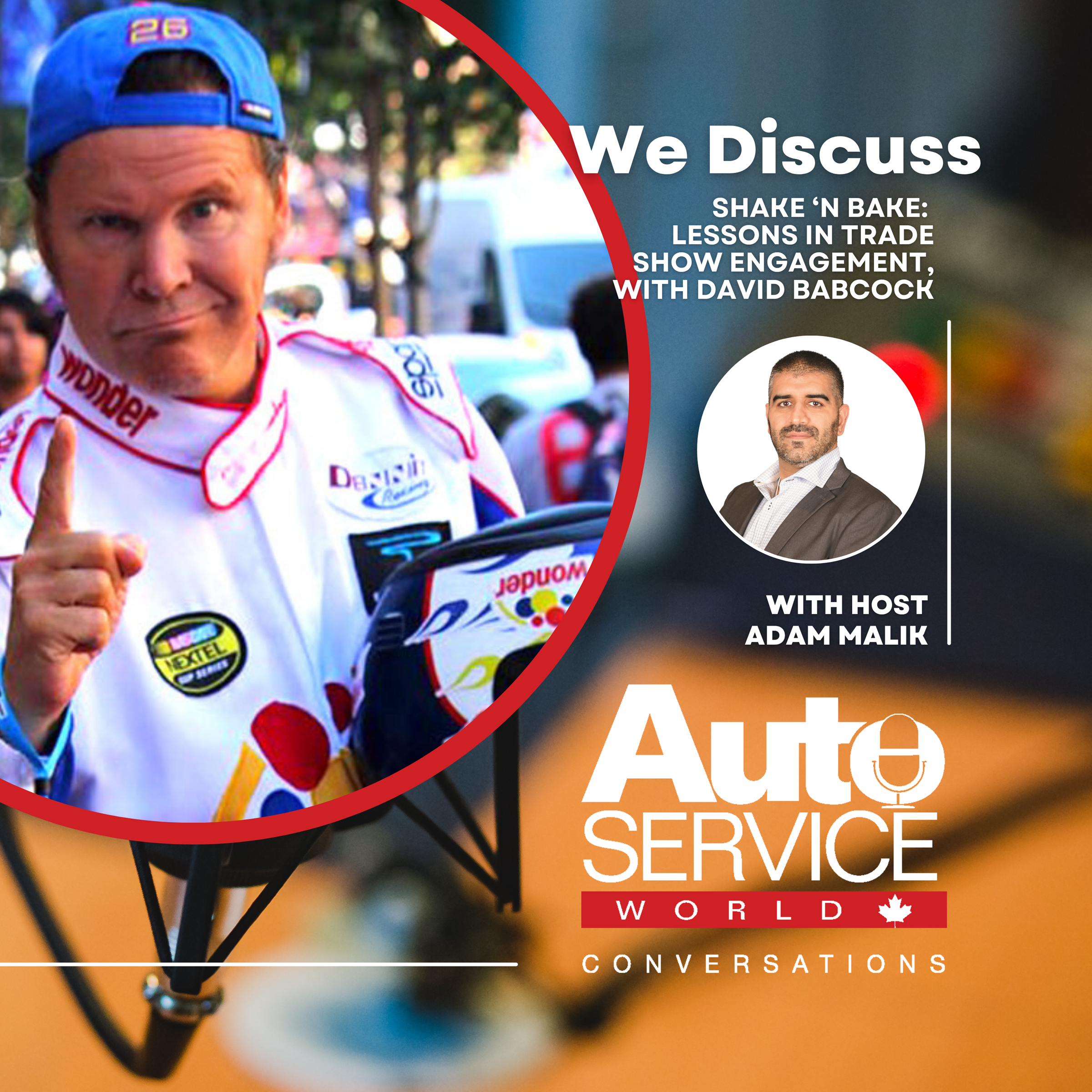
Will Ferrell impersonator David Babcock has built a career by stepping into character as Ron Burgundy, Ricky Bobby and Buddy the Elf — but his real value shows up on the trade show floor.
Speaking with Auto Service World Conversations, Babcock said most exhibitors lean on the same tired tactics: Spinning prize wheels, candy bowls and over-designed booths that blend together in what he calls “a gauntlet of chaos.”
“Everything is overly done, overly splashy, overly colourful, overly lit up,” said Babcock, who is also a marketing consultant for trade shows. “How do you filter through that?”
So if everyone is doing the same thing, how do you cut through? His pitch to exhibitors is simple: You need something different that’s eye-catching to stop the guy walking down the aisle in their tracks, draw them in and then hand them off smoothly to sales staff.
In Babcock’s case, it’s a guy in a white Wonder Bread racing ensemble at many automotive events. When he shows up as Ricky Bobby or Ron Burgundy, attendees often make a beeline for photos and social clips. That’s when he starts qualifying them. He’ll ask quick questions tied to the client’s target customer, then pull a salesperson into the moment.
He’ll ask them a question to gauge if they’re a good lead. Once he knows they fit the profile, he brings in the rep.
“’Hey, Doug, come here, take this picture,’” he described as the next step when he calls in the company’s representative. “Now my sales guy’s into the interaction.”
The goal is a warm handoff, not a hard pitch.
“There has been no hurdle to jump. There has been no resistance. There has been no anxious salesperson energy in that interaction,” Babcock said. “And then I’m like Homer Simpson, and I fade into the bushes.”
He’s blunt about what many companies get wrong, starting with the sales mindset. Too many reps treat big events as perks.
“People tend to believe that this is sort of a paid vacation,” he said, describing some as seeing it as an opportunity to party with clients and take part in the wining and dining. And if they show up late the next morning, it’s no big deal.
But even when they get to the floor, staff are often glued to their phones.
“When people see you on your phone, they don’t think you’re doing business, they think you’re looking at TikTok,” he said. “Those people are completely turned off on you.”
Spending priorities are another problem. Babcock said exhibitors sink money into the look of the booth instead of the experience inside it.
“What people do at shows is they spend too much money on carpet and chairs, and this and that, to kind of look like, ‘Oh, you know, we’re a big deal,” he said. “You don’t need to look like a big deal — you need to make them a big deal.”
For Babcock, that comes back to risk.
“No risk, no reward,” he said. “If you want to be one of these people that does the same stuff every time, you’re doing the same as everybody else, you’re going to make the same money as everybody else.”
Tune in to hear the full discussion by clicking the banner above or choosing your preferred listening platform below.
Choose your preferred platform:


Leave a Reply