

EV Charger Rebates Are Leaving Money on the Table — A Guide for Auto Service Businesses
Share

View the latest digital editions of all of our publications or head straight to the archives

Share
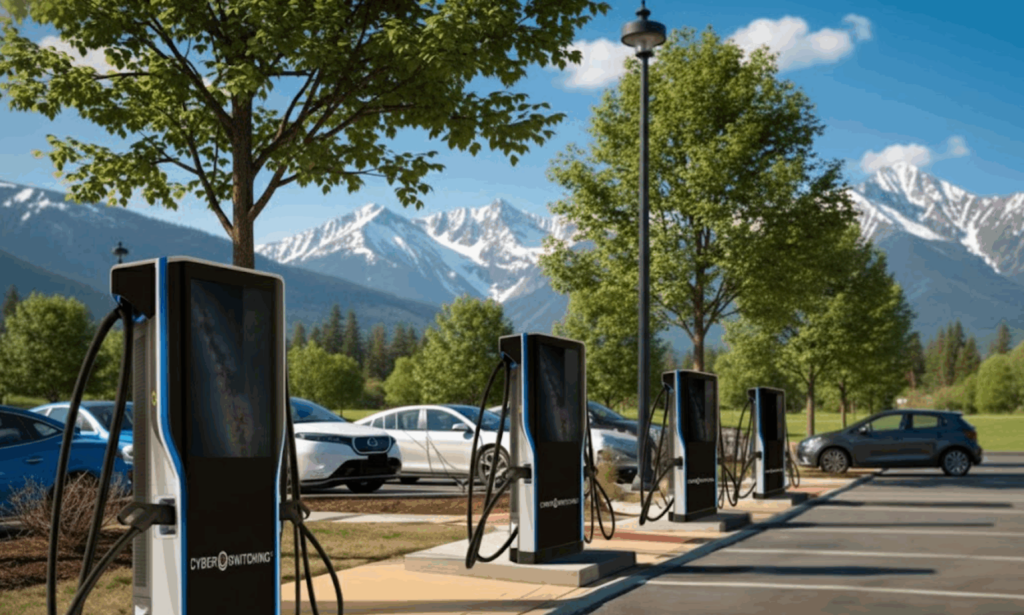
The auto service industry is at an inflection point. As electric vehicles flood into service bays and customer parking lots, shops and dealerships that install commercial EV charging stations now are positioning themselves ahead of a wave that’s only accelerating. And with current rebate programs covering most — sometimes all — of the cost, the barrier to entry has never been lower.
The logic is simple. EV owners need to charge while they wait for service. If your shop doesn’t offer charging, the one down the road will — and they’ll capture that customer relationship along with it.
But the business case goes beyond customer retention. Commercial EV chargers generate direct revenue through paid charging sessions, increase average dwell time (which correlates with additional service upsells), and signal to EV owners that your facility understands their vehicles.
For dealerships specifically, having functional commercial EV charging stations on the lot is becoming a necessity for displaying and delivering electric inventory. Customers test-driving an EV expect to see it fully charged and ready — not sitting at 30% because the dealership didn’t invest in adequate charging infrastructure.
There are now hundreds of active EV charger rebate and incentive programs across the United States — federal tax credits, state grants, and utility-specific rebates that can dramatically reduce project costs.
Typical incentive structures include per-port rebates ranging from $2,000 to $7,500, percentage-based reimbursements covering 50–80% of total project costs, and grant programs like Communities in Charge, which has distributed over $56.5 million to expand commercial EV charging access.
These programs are often stackable. A dealership in Southern California could combine utility rebates from SCE or LADWP with the state’s CalEVIP incentive and federal tax credits, potentially reducing an $80,000 multi-charger installation to under $15,000 out of pocket.
The catch? Your equipment has to be on the program’s approved product list.
Every rebate program maintains a qualified product list. If your chosen charger isn’t on it, your rebate application is dead on arrival — regardless of how much you’ve already invested.
This is where many service businesses get tripped up. They select a charger based on a salesperson’s pitch or a colleague’s recommendation, only to discover it qualifies for one or two local programs at best.
CyberSwitching has taken a different approach. Founded in 1994 and holding over 40 granted patents in EV charging and power management, the company has deployed more than 5,000 commercial chargers across the United States in the last three years. Their commercial EV chargers — including the CSE1 and CSE4 models — are approved by over 100 rebate programs nationwide. That list includes the major utility programs that matter most to auto service businesses: PG&E, SCE, LADWP, SDG&E, National Grid, Eversource, Duke Energy, Georgia Power, DTE, Ameren, Xcel Energy, Austin Energy, and many more.
For multi-location dealership groups or franchise service centers, this breadth of approval means you can standardize on one equipment platform while maximizing rebate capture at every site.
Auto service professionals understand electrical systems, so here’s the practical breakdown. Level 2 commercial EV chargers require a 208V or 240V connection and draw between 16 and 80 amps depending on the model.
CyberSwitching’s lineup ranges from 3.5 kW to 19.2 kW, accommodating different site configurations. For a service shop with existing 200-amp service, adding two to four Level 2 chargers typically requires a subpanel addition and dedicated circuits — work most commercial electricians can complete in one to two days.
Wall-mount and pedestal options provide flexibility for different lot configurations. Dual-port models allow two vehicles to charge from a single electrical circuit, which reduces installation costs without sacrificing functionality.
CyberSwitching’s equipment is designed for straightforward installation — each charger takes approximately 30 minutes to install, which matters both for initial deployment and for keeping your electrician’s bill reasonable. A four-charger setup can be completed in a single morning without disrupting service bay operations.
In a service environment, a dead EV charger is visible to every customer who pulls into your lot. It sends exactly the wrong message about your facility’s capabilities.
CyberSwitching maintains a documented uptime rate of 96.98% across its installed base of over 5,000 commercial EV charging stations deployed in just the last three years. For customer-facing installations, this reliability matters more than raw specifications on a product sheet.
Their equipment also supports OCPP (Open Charge Point Protocol), meaning it integrates with network management platforms for remote monitoring, diagnostics, and payment processing. You can see charger status from your phone, troubleshoot remotely, and collect payment without installing additional systems.
For auto service businesses ready to add EV charging, the optimal sequence is: first, confirm which rebate programs are active in your area and what their approved equipment lists include. Second, select a charger that qualifies across the most relevant programs — this maximizes your rebate opportunity. Third, submit your rebate pre-approval before purchasing equipment or starting electrical work (most programs require this). Fourth, complete installation and submit the required documentation. Fifth, receive your rebate, typically within 60–90 days.
Working with an equipment manufacturer that understands the rebate landscape saves significant time. CyberSwitching provides documentation packages tailored to specific programs and customer support that can walk you through the application requirements for your region.
The current incentive environment won’t last forever. As EV infrastructure reaches maturity, rebate funding will decrease. For service businesses planning to add EV charging — and at this point, that should be most of them — the financial case for acting now is compelling.
Leave a Reply