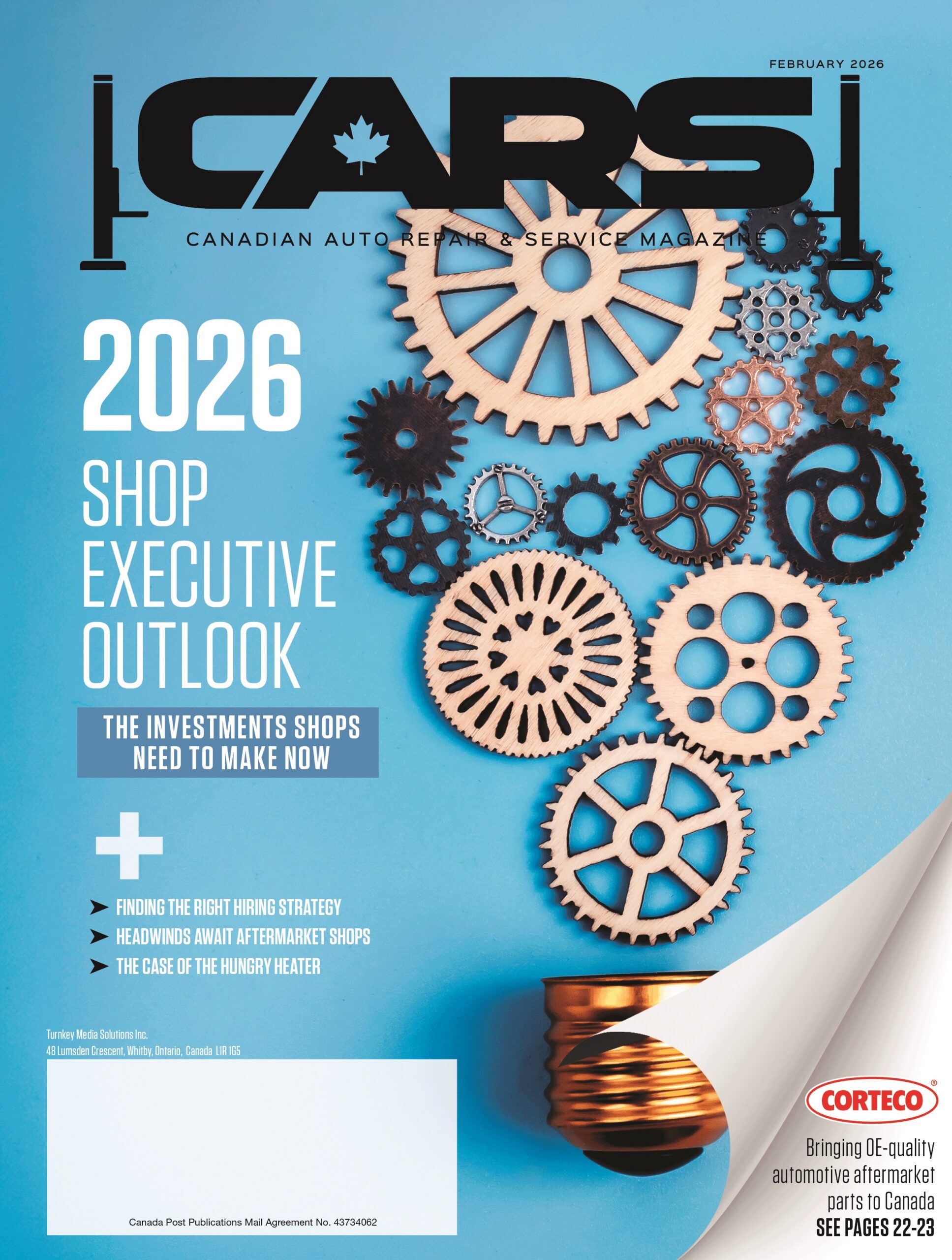

CARS 2026 Executive Outlook: Patty Kettles
Share

View the latest digital editions of all of our publications or head straight to the archives

Share

CARS reached out to leaders in the automotive repair and service sector of the automotive aftermarket to ask them about their thoughts about the industry over the next 12 months: How will this year be different, what will drive change and what will be the biggest challenge. We will present their answers in alphabetical order over the coming weeks…
You can view the full feature in the February 2026 issue.
Patty Kettles, Executive Director | Automotive Aftermarket Repair Organization of Canada
Successful shops are investing in training first, then aligning their tooling purchases to the work they want to perform profitably. Understanding ADAS, EV systems, software diagnostics and data access is essential, as is deciding whether those services will be delivered in-house or through strategic partnerships. Not every shop needs to do everything — but every shop needs a plan.
Equally important is building standardized diagnostic procedures and ensuring clear pricing models for diagnostic time are in place. Too many shops still undercharge — or don’t charge at all — for diagnostics, which erodes profitability in an increasingly high-tech environment. Shop leaders must view their facilities as professional service businesses, not just repair bays.
The industry must stop selling the trade the way it looked 25 years ago. Today’s technicians are problem-solvers, technologists and diagnosticians. That message needs to be front and center.
Retention is where the real work begins. The industry sometimes places unrealistic expectations on technicians by asking them to excel equally at mechanical repairs and advanced diagnostics. Clear career paths — from mechanical technician to diagnostic technician to technologist — help define progression and purpose.
Collaboration is also important: Shared training programs, association-led education and group purchasing for tools and equipment can help lessen the cost burden for shops.
Looking ahead, the biggest challenge for shops will remain keeping pace with change, especially as diagnostic tools become more specialized and costly. The opportunity, however, is significant. Shops that invest in training, professionalism, and trust will position themselves as trusted advisors, not just repair providers. The future belongs to those who embrace change, collaborate across the industry, and run their businesses with intention.






Leave a Reply