

Why Lane Change Mistakes Cause So Many Serious Crashes
Share

View the latest digital editions of all of our publications or head straight to the archives

Share
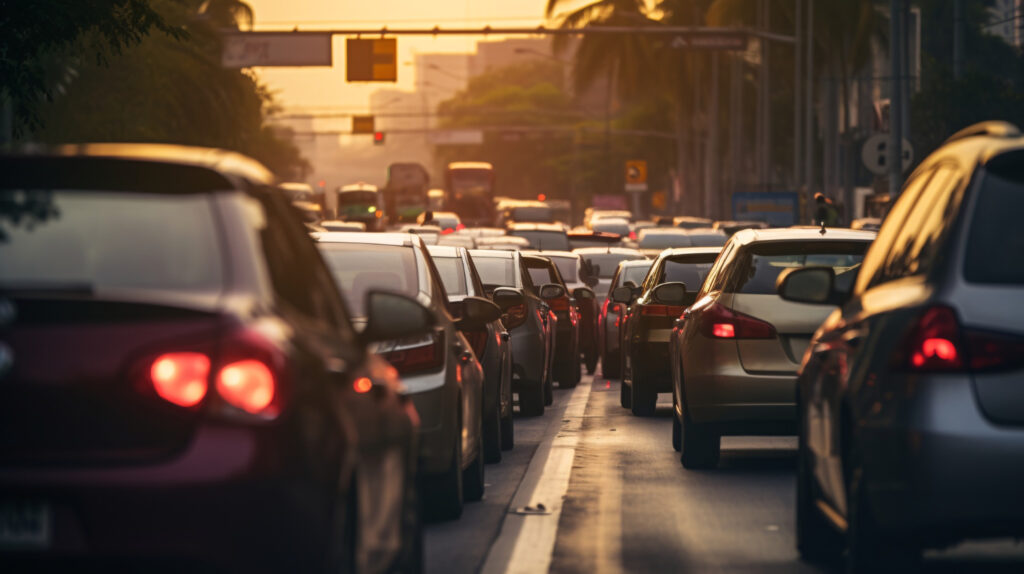
Lane change accidents, often mistakenly viewed as simple sideswipes or minor fender-benders, are statistically responsible for a disproportionate number of severe collisions on highways and multi-lane arterial roads. These incidents rarely involve a single factor; instead, they represent a critical failure in the driver’s ability to successfully execute the complex sequence of observation, judgment, and physical maneuvering required to merge safely.
The underlying danger stems from the speed differential between vehicles. When one car attempts a lane change, even a slight miscalculation of speed or distance forces an adjacent vehicle to brake or swerve violently. This sudden reaction creates a chain reaction in heavy traffic, leading to multiple impacts or sending one vehicle completely out of control and into another lane or the median.
The complexity of these scenarios, coupled with the high velocities involved on freeways, is why mistakes in this maneuver are far from trivial and frequently result in catastrophic outcomes. That’s why securing a successful lane change accident settlement requires thoroughly proving how a lapse in the at-fault driver’s attention or judgment led directly to the critical failure.
One of the most persistent technical challenges in driving remains the blind spot, the area around a vehicle that cannot be seen using the rearview and side mirrors alone. Even in modern vehicles, the design of the car’s body pillars creates physical areas that can fully conceal a vehicle traveling in an adjacent lane, particularly when mirrors are not properly adjusted.
The reliance on technology, while helpful, has also created a dangerous complacency. Many drivers now rely heavily on Blind Spot Monitoring (BSM) systems, which use sensors or cameras to alert drivers to traffic they cannot see. When these systems fail, or if the driver simply misunderstands the system’s limitations, they proceed with a maneuver based on a false sense of security.
The critical, non-negotiable step—a physical head check to confirm the lane is clear—is often skipped entirely because the driver assumes the technology has done the job. This human over-reliance on automated systems, combined with a literal blind spot, is a perfect recipe for a high-speed collision.
The simple act of activating a turn signal is arguably the single most important communication tool a driver has, yet the failure to signal is a primary cause of lane change accidents. Signaling is essential because it gives surrounding drivers the critical two-to-three second warning needed to adjust their speed, create space, or prepare for the upcoming maneuver.
When a driver changes lanes without signaling, they introduce an element of chaos and surprise that forces immediate, unplanned defensive action from others. The surrounding drivers have no time to slow down or move out of the way, making an impact almost unavoidable, especially in dense, high-speed traffic.
This communication breakdown is further complicated by aggressive driving. Some drivers signal simultaneously with their lane change, or signal only once they are already halfway into the adjacent lane. This insufficient warning is almost as dangerous as no signal at all, demonstrating a disregard for the safety of fellow motorists and a clear breach of traffic protocol.
Successful merging relies entirely on the driver’s ability to correctly estimate two things: the speed of the vehicle they are merging in front of and the available gap distance. Misjudging either of these variables forces a dangerous situation where the merging driver either cuts off the adjacent vehicle or slows down too much, causing a hazard.
Many drivers attempt to execute a lane change into a gap that is simply too small for their speed, forcing the trailing vehicle to slam on its brakes to avoid a rear-end collision. In heavy, high-speed freeway traffic, this sudden braking often leads to a chain reaction of rear-end crashes stretching back down the lane.
The pressure to maintain speed and the impatience caused by congestion encourage drivers to follow too closely, or tailgate. When the lead car then attempts an unexpected, unsignaled lane change, the tailgating driver has virtually no reaction time, leading to a direct sideswipe or a major loss of control as they swerve to avoid contact.
Lane changes require intense focus and a rapid processing of visual information—a level of attention that is directly compromised by distraction and fatigue. A driver who is texting or interacting with their infotainment system is simply not monitoring their mirrors or performing the crucial head check needed to confirm the safety of the maneuver.
Cognitive distraction, such as intense conversation or preoccupation with emotional turmoil, also impairs the judgment needed to accurately gauge speed and distance. Even if the driver is physically looking in the mirror, their brain may not be properly registering the velocity of the approaching vehicle, leading to a misjudgment of the merge distance.
Fatigue is equally dangerous, slowing down reaction times and causing a kind of tunnel vision where the driver only focuses straight ahead, neglecting peripheral movement and mirror checks. This diminished alertness reduces the driver’s capacity to recognize the subtle cues that indicate a safe or unsafe moment to execute the lane change, resulting in a dangerous, uncontrolled swerve.
Lane change accidents are a common and serious consequence of driver complacency and misjudgment, proving that a maneuver performed countless times still demands absolute attention. These incidents often expose negligence related to reliance on technology, failure to communicate, or simple miscalculation of physics.
We’ve detailed the persistent danger of blind spots, particularly when drivers neglect to perform a physical head check in favor of relying solely on electronic monitors. We also emphasized how a failure to signal or an aggressive cut-off can create immediate hazards for surrounding traffic, often leading to multi-car collisions.
Successful negotiation hinges on proving the merging driver failed in one of these critical steps of observation or communication. Vigilance, proper mirror usage, and the consistent use of a signal are the only reliable defenses against becoming another statistic in this highly dangerous type of crash.


Leave a Reply